Shaker Square Historic District (Boundary Increase)

Why it's listed
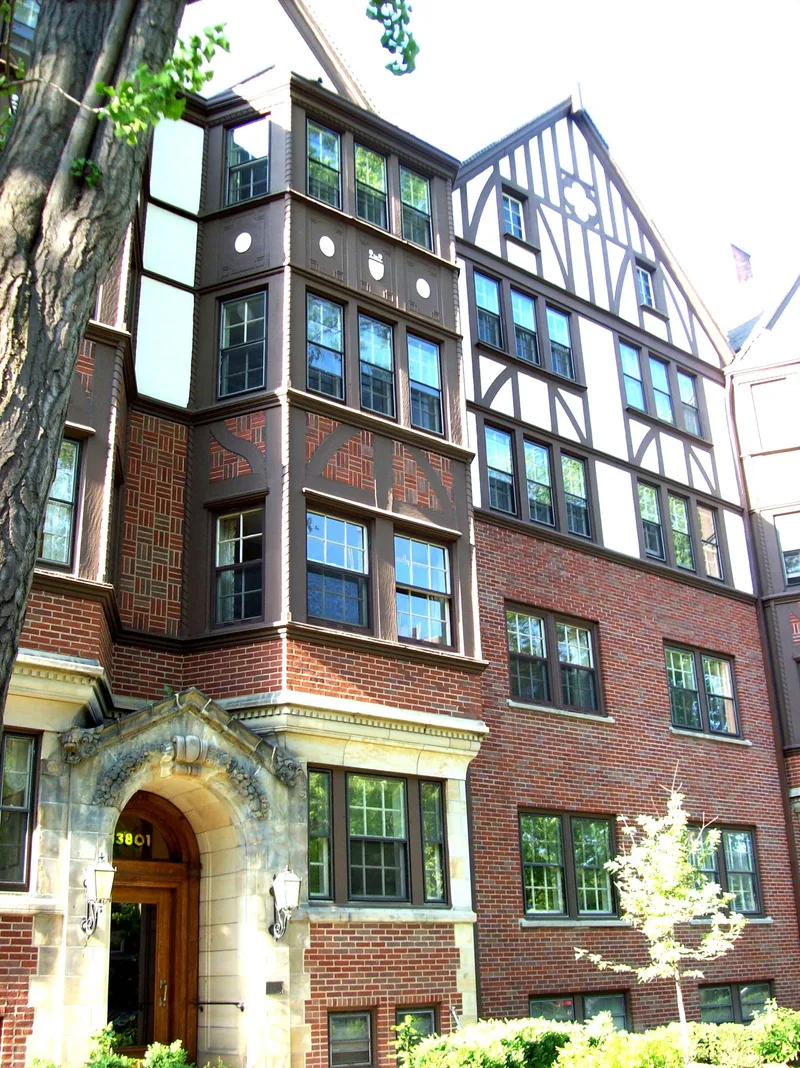
Surrounding Shaker Square in Cleveland and Shaker Heights, Ohio, this district contains 106 buildings laid out by brothers O.P. and M.J. Van Sweringen as the western gateway to their Shaker Heights suburb. At its center is the Georgian Revival square of 1927-29, an octagon of brick buildings with white trim and slate roofs. Around it, apartment buildings and a street of two-story houses were built mostly between 1920 and 1932, with some later construction into the 1950s. Deed restrictions set uses, heights and permitted styles, limited to American Colonial, English and French designs, so the area reads as a unified whole. Moreland Courts, a quarter-mile complex by Alfred W. Harris, presents a sequence of English architectural styles. The district is cited for its role in community planning, architecture, commerce and transportation, tied to the Van Sweringens' rail and automobile suburb. Buildings are generally well maintained; two altered gas stations are excluded.
Machine-generated summary. This summary was generated by a language model from the official nomination document and has not been reviewed line by line by an editor. It may contain errors. Check the source document before relying on any detail. Source: nomination document (PDF) · catalog entry. Generated October 2026 (model claude-sonnet-5-5, prompt v1.0-2026-10-29).
| Period of significance | c.1918-1933 |
|---|---|
| Styles | Georgian Revival, American Colonial, English (Tudor, Gothic) and French styles |
| Areas of significance | Community Planning and Development, Commerce, Transportation, Architecture |
| Acreage | 64 |
| Boundary source | NPS cultural-resource GIS polygon |
| Full listing page | Shaker Square Historic District (Boundary Increase) (property record) |
What listing means for this property
This is a historic district. Buildings within its boundary are either contributing (they add to the district's significance) or non-contributing. Owners of contributing income-producing buildings can claim the 20% federal rehabilitation tax credit; homeowners should look at state credits. National Register districts impose no design review by themselves; a local historic district ordinance, if one exists, does (the difference explained).
General information, not legal or tax advice. Rules change; confirm with your State Historic Preservation Office or a qualified adviser.