Saint Anne's Hill Historic District

Why it's listed
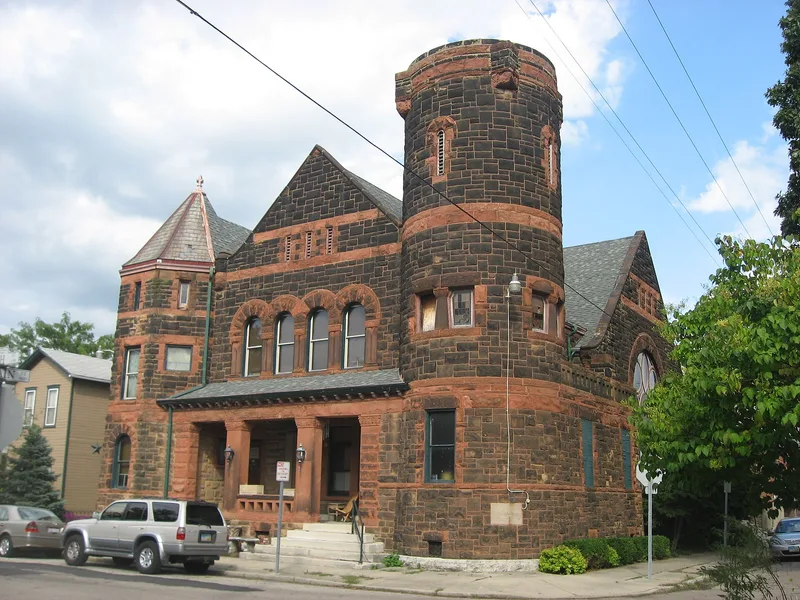
St. Anne's Hill is a fourteen-block neighborhood of about 200 buildings just east of downtown Dayton, Ohio. Wide streets and large shade trees frame a mix of houses built mostly between 1860 and the early twentieth century. Roughly 40 percent are wood or brick folk-type dwellings with Eastlake porches, and about 30 percent are small cottages. Larger homes show Second Empire, Gothic, Romanesque and Queen Anne influences, including the Bossler Mansion and the Jacob Joyce House. Three large churches, a Fifth Street commercial strip of about 25 buildings from around 1880, and the Odd Fellows Lodge complete the neighborhood. The district was platted from 1845 and grew after the Miami-Erie Canal reached Dayton, drawing German immigrant workers, tradesmen and prominent German citizens. It is presented as Dayton's best and most intact German ethnic neighborhood and one of the city's few intact areas of late nineteenth century vernacular housing. It became a locally designated district in 1974.
Machine-generated summary. This summary was generated by a language model from the official nomination document and has not been reviewed line by line by an editor. It may contain errors. Check the source document before relying on any detail. Source: nomination document (PDF) · catalog entry. Generated October 2026 (model claude-sonnet-5-5, prompt v1.0-2026-10-29).
| Period of significance | 1860-1915 |
|---|---|
| Styles | Predominantly vernacular (folk-type and cottage) dwellings with Italianate, Gothic Revival, Romanesque, Second Empire and Queen Anne influences |
| Areas of significance | European, Exploration/Settlement, Architecture |
| Acreage | 50 |
| Boundary source | NPS cultural-resource GIS polygon |
| Full listing page | Saint Anne's Hill Historic District (property record) |
What listing means for this property
This is a historic district. Buildings within its boundary are either contributing (they add to the district's significance) or non-contributing. Owners of contributing income-producing buildings can claim the 20% federal rehabilitation tax credit; homeowners should look at state credits. National Register districts impose no design review by themselves; a local historic district ordinance, if one exists, does (the difference explained).
General information, not legal or tax advice. Rules change; confirm with your State Historic Preservation Office or a qualified adviser.