Rossville Historic District

Why it's listed
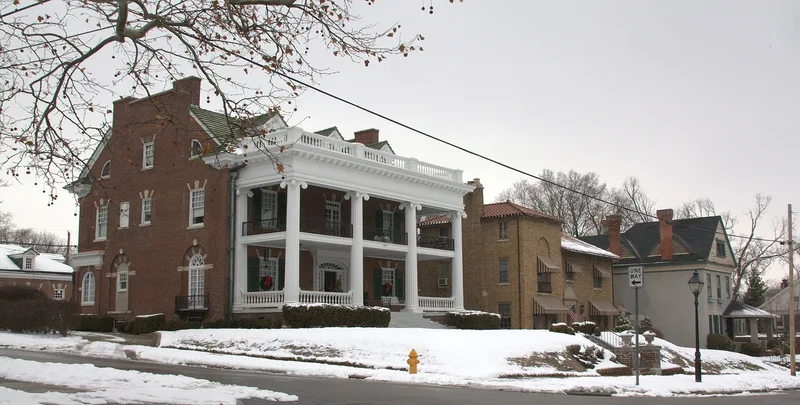
Rossville began as a separate town west of the Great Miami River, platted in 1804 on land from a 1795 grant to John Cleves Symmes and named for Senator James Ross. It was annexed to Hamilton, Ohio, in 1827, split away about five years later, and was annexed again in 1853. Today the district covers about ten and a half residential blocks with roughly 130 buildings. The earliest unaltered structure dates from 1832, and Federal houses built by tradesmen are common in the northern blocks. Later development along South "D" Street added Italianate, Queen Anne and Eastlake homes, followed by early twentieth century Revival styles. Tree-lined streets and surviving cast iron fences add to the older setting. Six landmarks stand out: the Miami (Adams) School, First United Church of Christ, the Children's Home, the former Sohngen Brewery, the Sohngen Malthouse, and the C & O Railroad arches and trestle. The seventeen limestone arches, still carrying trains, divide the district.
Machine-generated summary. This summary was generated by a language model from the official nomination document and has not been reviewed line by line by an editor. It may contain errors. Check the source document before relying on any detail. Source: nomination document (PDF) · catalog entry. Generated October 2026 (model claude-sonnet-5-5, prompt v1.0-2026-10-29).
| Period of significance | 19th and 20th centuries (1830-1920 given for the buildings) |
|---|---|
| Styles | Federal, Greek Revival, Italianate, Queen Anne, Eastlake, Stick, and Spanish and Georgian Revival styles |
| Areas of significance | Engineering, Transportation, Architecture |
| Acreage | 56.9 |
| Boundary source | NPS cultural-resource GIS polygon |
| Full listing page | Rossville Historic District (property record) |
What listing means for this property
This is a historic district. Buildings within its boundary are either contributing (they add to the district's significance) or non-contributing. Owners of contributing income-producing buildings can claim the 20% federal rehabilitation tax credit; homeowners should look at state credits. National Register districts impose no design review by themselves; a local historic district ordinance, if one exists, does (the difference explained).
General information, not legal or tax advice. Rules change; confirm with your State Historic Preservation Office or a qualified adviser.