Rockefeller Park Bridges

Why it's listed
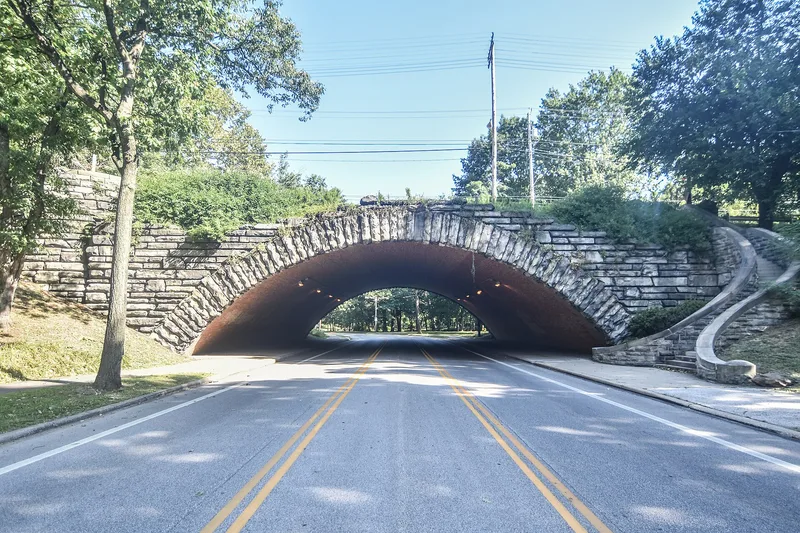
Four bridges cross Liberty Boulevard in Cleveland's Rockefeller Park: Wade Park Avenue, Superior Avenue, Saint Clair Avenue and the Penn Central Railroad bridge. All were designed by architect Charles F. Schweinfurth in the Richardsonian manner and completed between 1897 and 1907. John D. Rockefeller, Sr. gave the park's 273 acres to the city in 1896, then pledged $100,000 for bridges to control traffic over the park road, on condition that residents raise another $20,000. The money was quickly raised. The Wade Park Avenue Bridge, with a single 88-foot arch, overlooks and a winding staircase to the boulevard, is regarded as the most admired. The Superior Avenue span has two arches, one crossing Doan Brook, and Saint Clair has three openings. The railroad bridge has a flattened arch flanked by small turrets. Together they are recognized for their engineering and for their place in the park's landscape.
Machine-generated summary. This summary was generated by a language model from the official nomination document and has not been reviewed line by line by an editor. It may contain errors. Check the source document before relying on any detail. Source: nomination document (PDF) · catalog entry. Generated October 2026 (model claude-sonnet-5-5, prompt v1.0-2026-10-29).
| Period of significance | 1897-1907 |
|---|---|
| Styles | Richardsonian |
| Areas of significance | Landscape Architecture, Engineering |
| Acreage | 4 |
| Boundary source | NPS cultural-resource GIS polygon |
| Full listing page | Rockefeller Park Bridges (property record) |
What listing means for this property
This is a historic district. Buildings within its boundary are either contributing (they add to the district's significance) or non-contributing. Owners of contributing income-producing buildings can claim the 20% federal rehabilitation tax credit; homeowners should look at state credits. National Register districts impose no design review by themselves; a local historic district ordinance, if one exists, does (the difference explained).
General information, not legal or tax advice. Rules change; confirm with your State Historic Preservation Office or a qualified adviser.