Raemelton Farm Historic District

Why it's listed
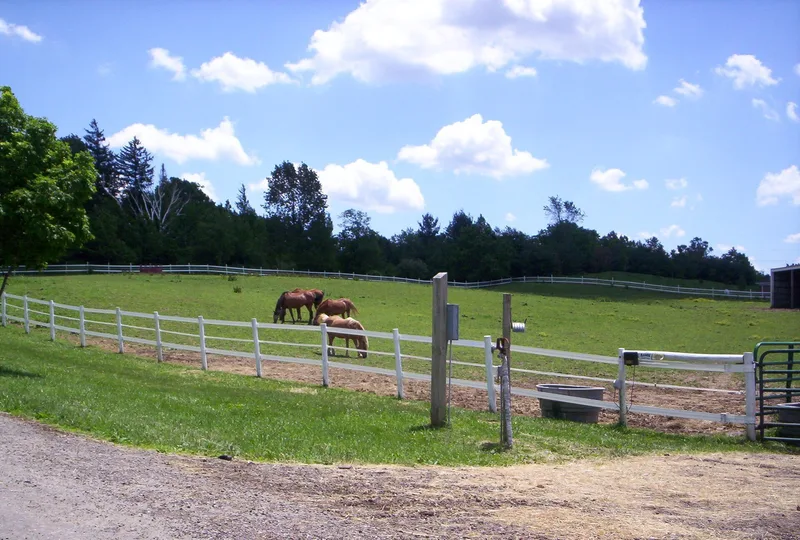
Raemelton Farm occupies a 65-acre triangle of land in southwest Mansfield, Ohio. The land was part of the McKee farm, settled in the early 1800s, and Mansfield industrialist Frank B. Black bought it in 1910 to create a country estate. He remodeled the McKee farmhouse, barn and shed. He ran a Guernsey dairy and kept sheep, and later focused on horses and riding. Between 1929 and 1937 he built or enlarged the Stable, Machinery Hall, two Grooms' Cottages, the Riding Hall, a tool house and a greenhouse. Most are frame buildings painted "Raemelton yellow," with Classical Revival or Craftsman detailing. Landscape architect Marian Coffin designed a Rock Garden in 1933-1934, and a marker honors Black's show horse Quaker Lady. Black also formed the Raemelton Riding Club to promote horsemanship and polo. The district has 13 contributing resources, along with the paddock, former polo field, pastures, bridle trails and woods.
Machine-generated summary. This summary was generated by a language model from the official nomination document and has not been reviewed line by line by an editor. It may contain errors. Check the source document before relying on any detail. Source: nomination document (PDF) · catalog entry. Generated October 2026 (model claude-sonnet-5-5, prompt v1.0-2026-10-29).
| Period of significance | 1910 - 1937 |
|---|---|
| Styles | Greek Revival; Classical Revival; Bungalow/Craftsman |
| Areas of significance | Architecture, Entertainment/Recreation, Landscape Architecture, Social History |
| Acreage | 65 |
| Boundary source | NPS cultural-resource GIS polygon |
| Full listing page | Raemelton Farm Historic District (property record) |
What listing means for this property
This is a historic district. Buildings within its boundary are either contributing (they add to the district's significance) or non-contributing. Owners of contributing income-producing buildings can claim the 20% federal rehabilitation tax credit; homeowners should look at state credits. National Register districts impose no design review by themselves; a local historic district ordinance, if one exists, does (the difference explained).
General information, not legal or tax advice. Rules change; confirm with your State Historic Preservation Office or a qualified adviser.