Peninsula Village Historic District

Why it's listed
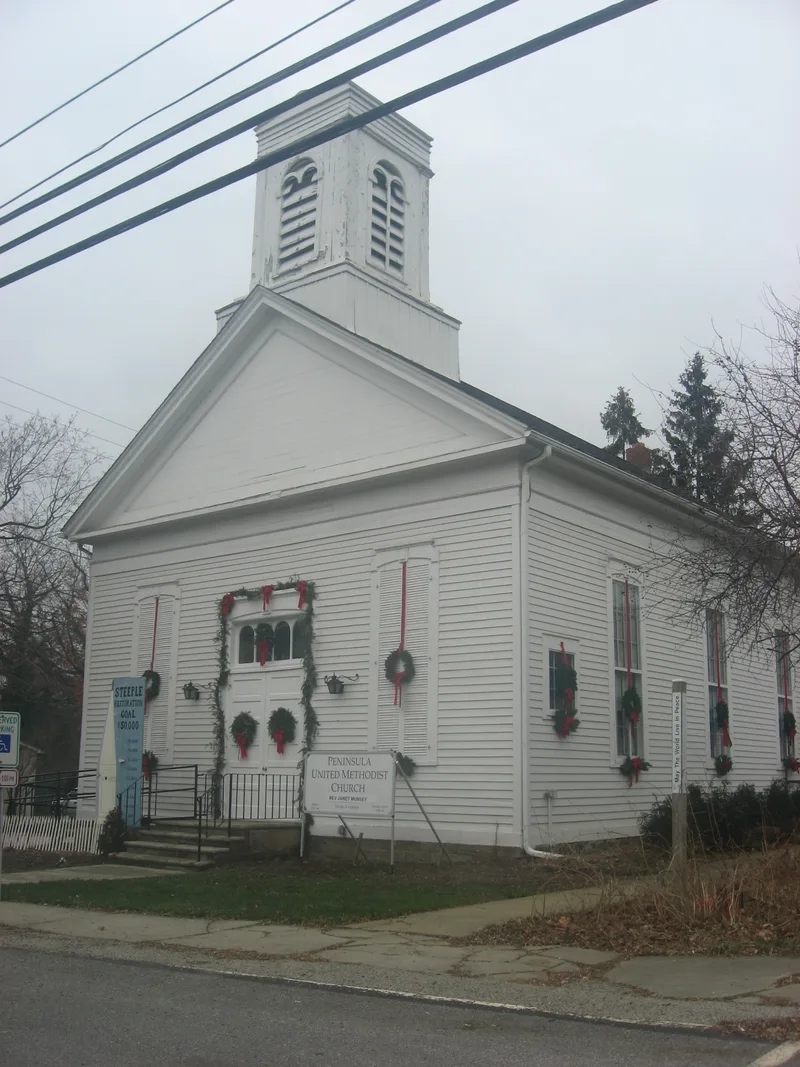
Peninsula is a canal-era village on the Cuyahoga River, laid out along one east-west highway, State Route 303. The district takes in about seventy buildings, among them a stone town hall built as a schoolhouse around 1857, three churches, stores, a G.A.R. hall, an 1887 Stick Style high school and houses in frame, brick and stone. Their styles range from late Federal and Greek Revival to Italianate and Eastlake. Canal remains are also included: the river elbow, a dam, a spillway, aqueduct ruins and Lock 29 of the Ohio Canal. Hermon Bronson arrived in 1824, platted the village in 1837 and tunneled through the neck of a river loop to power a gristmill. Canal traffic, boat building, mills, cheese factories and sandstone quarries made the village prosper, and the Valley Railroad arrived in 1875. The district was listed because it preserves this mid-nineteenth-century town largely intact, and because private restoration has kept its buildings occupied and sound.
Machine-generated summary. This summary was generated by a language model from the official nomination document and has not been reviewed line by line by an editor. It may contain errors. Check the source document before relying on any detail. Source: nomination document (PDF) · catalog entry. Generated October 2026 (model claude-sonnet-5-5, prompt v1.0-2026-10-29).
| Period of significance | 1827-1887 |
|---|---|
| Styles | Late Federal, Greek Revival, Early Gothic Revival, Italianate, Stick Style and Eastlake |
| Areas of significance | Commerce, Engineering, Transportation, Architecture, Social History |
| Acreage | 53 |
| Boundary source | NPS cultural-resource GIS polygon |
| Full listing page | Peninsula Village Historic District (property record) |
What listing means for this property
This is a historic district. Buildings within its boundary are either contributing (they add to the district's significance) or non-contributing. Owners of contributing income-producing buildings can claim the 20% federal rehabilitation tax credit; homeowners should look at state credits. National Register districts impose no design review by themselves; a local historic district ordinance, if one exists, does (the difference explained).
General information, not legal or tax advice. Rules change; confirm with your State Historic Preservation Office or a qualified adviser.