Old West End Historic District (Boundary Increase/Decrease)

Why it's listed
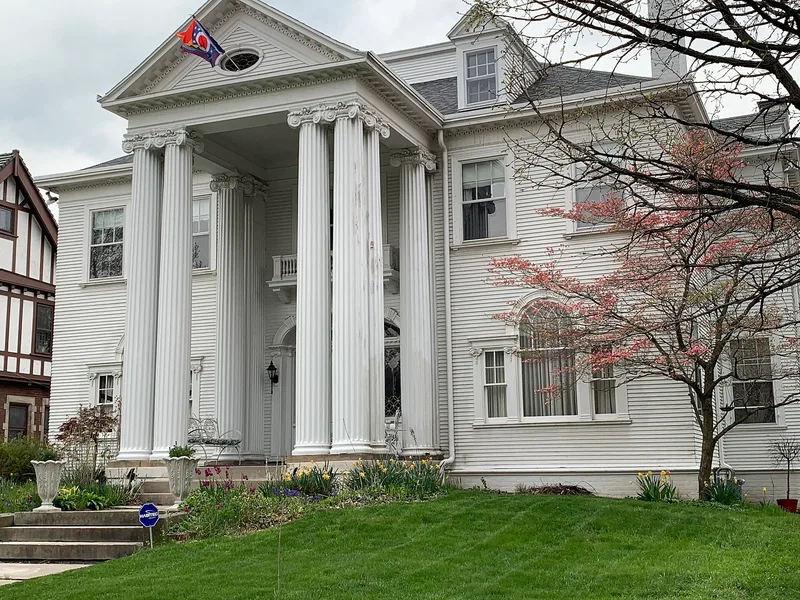
This amendment enlarges the Old West End Historic District in Toledo, Ohio, to take in a fringe area of about 450 buildings. They are mostly single-family homes and duplexes built before the 1920s, along with six churches, two schools, a hotel, a theater and a small commercial district at Collingwood and Delaware. The area runs along Collingwood Boulevard, once called the Avenue of Churches, and Glenwood Avenue. Its houses are smaller than those in the original district but date from the same years, roughly 1890 to 1920, and several were designed by architects who worked there, including Harry Wachter and David L. Stine. Industrialists, physicians, judges and a Toledo mayor lived here. Styles range from Queen Anne and Shingle to Spanish Revival, Gothic Revival and Colonial Revival. Of the 450 structures, 359 are counted as contributing, and 75 more could qualify once reversible changes are undone. The addition was accepted because it forms a logical continuation of the original district.
Machine-generated summary. This summary was generated by a language model from the official nomination document and has not been reviewed line by line by an editor. It may contain errors. Check the source document before relying on any detail. Source: nomination document (PDF) · catalog entry. Generated October 2026 (model claude-sonnet-5-5, prompt v1.0-2026-10-29).
| Period of significance | 1890-1920s |
|---|---|
| Styles | Mixed styles including English Cottage, Shingle, Spanish Revival, Italian Renaissance, Colonial Revival, Gothic Revival, Queen Anne and Eclectic |
| Areas of significance | Commerce, Architecture |
| Acreage | 144.2 |
| Boundary source | NPS cultural-resource GIS polygon |
| Full listing page | Old West End Historic District (Boundary Increase/Decrease) (property record) |
What listing means for this property
This is a historic district. Buildings within its boundary are either contributing (they add to the district's significance) or non-contributing. Owners of contributing income-producing buildings can claim the 20% federal rehabilitation tax credit; homeowners should look at state credits. National Register districts impose no design review by themselves; a local historic district ordinance, if one exists, does (the difference explained).
General information, not legal or tax advice. Rules change; confirm with your State Historic Preservation Office or a qualified adviser.