Ohio University Campus Green Historic District

Why it's listed
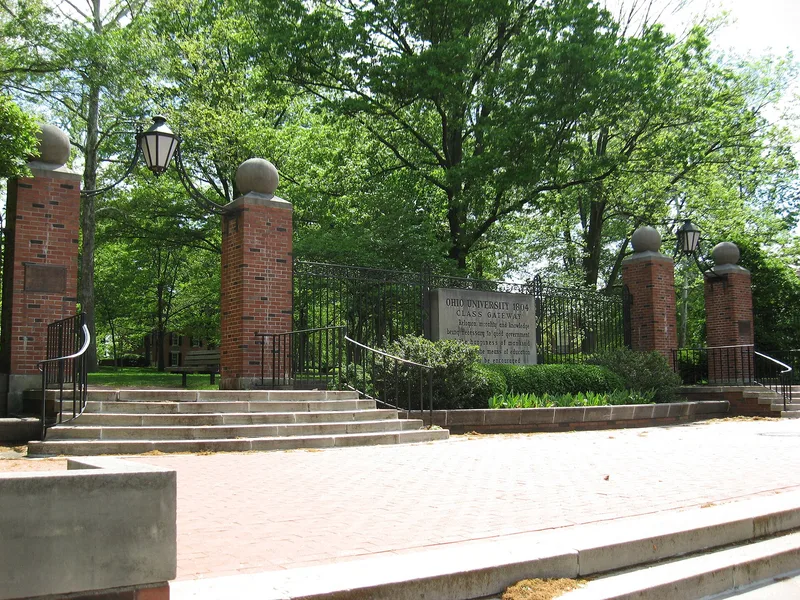
Ohio University's College Green in Athens, Ohio, is the core of a campus district covering parts of eight city blocks. The green was first laid out in 1804 as two tracts of 3.6 acres each, and the Hitching Ground was added in 1896 on condition that it be kept seeded and well maintained. Cutler Hall, built in 1816 in the Federal style, stands at the high point of the green and is described as the oldest building for higher education west of the Appalachians. Wilson and McGuffey Halls, built in 1836, flank it. Later buildings, many by architect Frank L. Packard, are mostly Georgian Revival and include Ellis, Gordy, Lindley and Bentley Halls. Older houses around the edges, a Civil War soldiers' monument and a replica campus gateway add to the setting. Several landmarks, such as Tupper Hall, the old chapel, and the McGuffey Elms, have been lost. Newer buildings are classed as intrusions.
Machine-generated summary. This summary was generated by a language model from the official nomination document and has not been reviewed line by line by an editor. It may contain errors. Check the source document before relying on any detail. Source: nomination document (PDF) · catalog entry. Generated October 2026 (model claude-sonnet-5-5, prompt v1.0-2026-10-29).
| Styles | Federal, Georgian Revival, Second Renaissance Revival, Italianate and other styles |
|---|---|
| Areas of significance | Education, Architecture |
| Acreage | 23.4 |
| Boundary source | NPS cultural-resource GIS polygon |
| Full listing page | Ohio University Campus Green Historic District (property record) |
What listing means for this property
This is a historic district. Buildings within its boundary are either contributing (they add to the district's significance) or non-contributing. Owners of contributing income-producing buildings can claim the 20% federal rehabilitation tax credit; homeowners should look at state credits. National Register districts impose no design review by themselves; a local historic district ordinance, if one exists, does (the difference explained).
General information, not legal or tax advice. Rules change; confirm with your State Historic Preservation Office or a qualified adviser.