Ohio and Erie Canal

Why it's listed
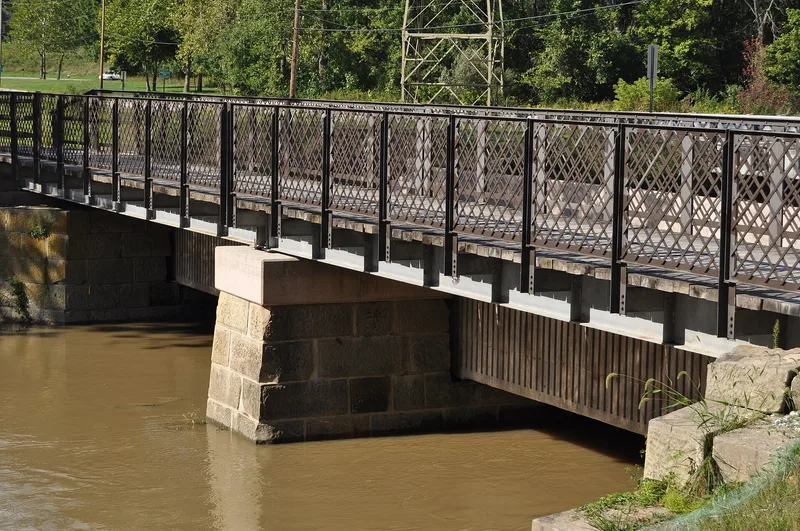
This stretch of the Ohio and Erie Canal in Valley View, south of Cleveland, preserves a working picture of Ohio's canal era. The nominated section runs about 1.5 miles and includes Locks 37, 38 and 39, an aqueduct carrying the canal over Tinkers Creek, and two buildings from the period of canal use: a mill at Lock 37 and a two-story clapboard building at Lock 38 that once served as a store and inn and as a station for exchanging towing horses. The sandstone locks were repaired with cement before 1905, and the aqueduct's wooden supports were replaced with metal in 1905, though original sandstone columns remain. The canal, begun in 1825 and reaching Portsmouth by 1833, joined Lake Erie to the Ohio River and spurred population, commerce and industry across the state. Railroads reduced its use by the 1860s. This section was recognized as a National Historic Landmark for illustrating that period.
Machine-generated summary. This summary was generated by a language model from the official nomination document and has not been reviewed line by line by an editor. It may contain errors. Check the source document before relying on any detail. Source: nomination document (PDF) · catalog entry. Generated October 2026 (model claude-sonnet-5-5, prompt v1.0-2026-10-29).
| Period of significance | 1825-1860 |
|---|---|
| Areas of significance | Industry, Commerce |
| Acreage | 24.5 |
| Boundary source | NPS cultural-resource GIS polygon |
| Full listing page | Ohio and Erie Canal (property record) |
What listing means for this property
This is a historic district. Buildings within its boundary are either contributing (they add to the district's significance) or non-contributing. Owners of contributing income-producing buildings can claim the 20% federal rehabilitation tax credit; homeowners should look at state credits. National Register districts impose no design review by themselves; a local historic district ordinance, if one exists, does (the difference explained).
General information, not legal or tax advice. Rules change; confirm with your State Historic Preservation Office or a qualified adviser.