North Columbus Commercial Historic District

Why it's listed
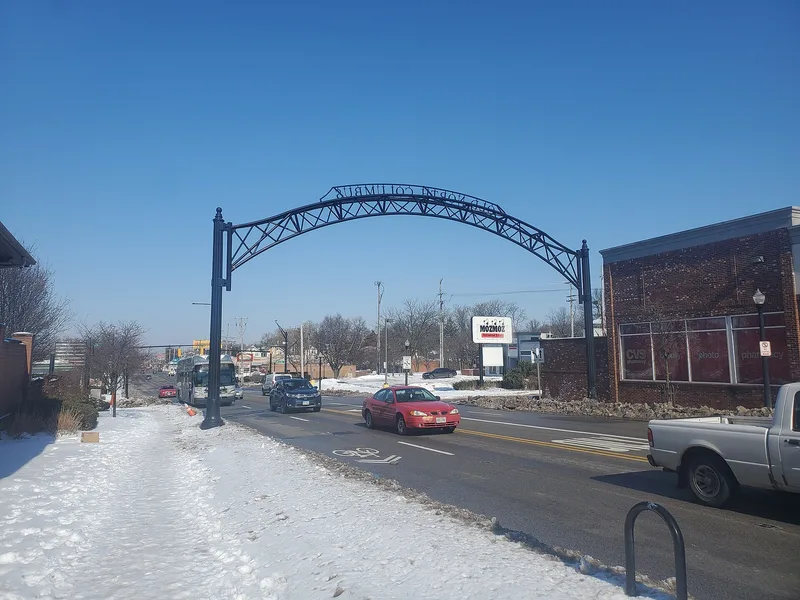
North Columbus Commercial Historic District is a compact, two-block stretch of storefronts along N. High Street, roughly four miles north of downtown Columbus. Its 25 buildings, all contributing, date from about 1880 to 1960 and sit at the sidewalk edge, giving the area a density missing from the newer, parking-oriented development nearby. Styles include Italianate, Tudor Revival, Neo-Classical Revival, Craftsman touches and a Moderne building. Examples range from the 1891-92 Haynes Block to a 1925 Tudor Revival corner building with slate roof and half-timbering. Many storefronts have been altered, though most keep their historic layout. The district was recognized for its link to the commercial growth of North Columbus, a town established in 1842 that developed as a trading and milling center rather than around a single family or institution. Restaurants, bars, a hardware store and a drug store still operate here, some for decades.
Machine-generated summary. This summary was generated by a language model from the official nomination document and has not been reviewed line by line by an editor. It may contain errors. Check the source document before relying on any detail. Source: nomination document (PDF) · catalog entry. Generated October 2026 (model claude-sonnet-5-5, prompt v1.0-2026-10-29).
| Period of significance | 1880s-1960 |
|---|---|
| Styles | Late Victorian: Italianate; Late 19th & 20th Century Revivals: Classical Revival, Tudor Revival; Bungalow/Craftsman; Modern Movement: Moderne |
| Areas of significance | Commerce, Architecture |
| Acreage | 4.2 |
| Boundary source | NPS cultural-resource GIS polygon |
| Full listing page | North Columbus Commercial Historic District (property record) |
What listing means for this property
This is a historic district. Buildings within its boundary are either contributing (they add to the district's significance) or non-contributing. Owners of contributing income-producing buildings can claim the 20% federal rehabilitation tax credit; homeowners should look at state credits. National Register districts impose no design review by themselves; a local historic district ordinance, if one exists, does (the difference explained).
General information, not legal or tax advice. Rules change; confirm with your State Historic Preservation Office or a qualified adviser.