Mount Union College District

The National Park Service has not published a boundary polygon for this district; the map shows the listed properties inside it and the district's reference point.
Why it's listed
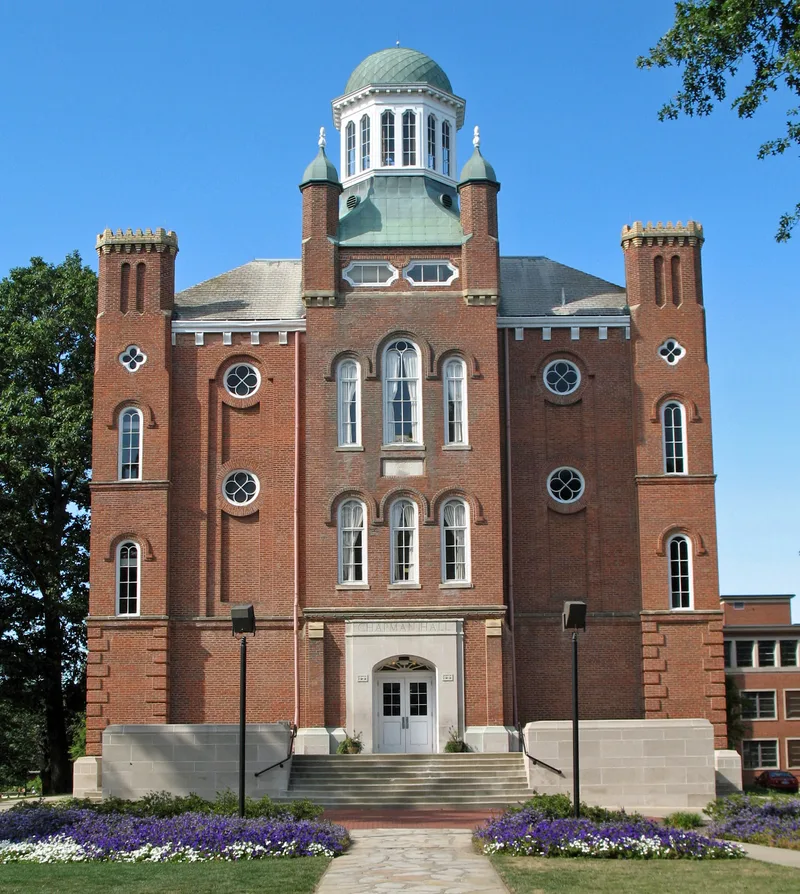
Mount Union College District in Alliance, Ohio, was nominated as a group of three 19th-century campus buildings: Chapman Hall, Miller Hall and Morgan Gymnasium. The college was chartered in 1858, growing out of a school begun in 1846 by Orville Nelson Hartshorn. Chapman Hall, built in 1862-1864 and designed by Simeon Porter, combines Romanesque, Gothic, Colonial or Greek Revival, and Italianate features in red brick with corner towers and a cupola. It is described as the only remaining Ohio college building built during the Civil War. Miller Hall, a brick dormitory from 1866, is noted for engaged piers and segmental arches. Morgan Gymnasium, built in 1890-1891 in Romanesque Revival style, hosted Mount Union's first home basketball game in 1897. Letters filed with the nomination state the gymnasium was demolished in September 1972, shortly before the district was entered in the register.
Machine-generated summary. This summary was generated by a language model from the official nomination document and has not been reviewed line by line by an editor. It may contain errors. Check the source document before relying on any detail. Source: nomination document (PDF) · catalog entry. Generated October 2026 (model claude-sonnet-5-5, prompt v1.0-2026-10-29).
| Period of significance | 1862-1891 |
|---|---|
| Styles | Romanesque (Chapman Hall); Romanesque Revival (Morgan Gymnasium) |
| Areas of significance | Education, Architecture |
| Acreage | 3.5 |
| Boundary source | not published |
| Full listing page | Mount Union College District (property record) |
What listing means for this property
This is a historic district. Buildings within its boundary are either contributing (they add to the district's significance) or non-contributing. Owners of contributing income-producing buildings can claim the 20% federal rehabilitation tax credit; homeowners should look at state credits. National Register districts impose no design review by themselves; a local historic district ordinance, if one exists, does (the difference explained).
General information, not legal or tax advice. Rules change; confirm with your State Historic Preservation Office or a qualified adviser.