Mound City Group National Monument

Why it's listed
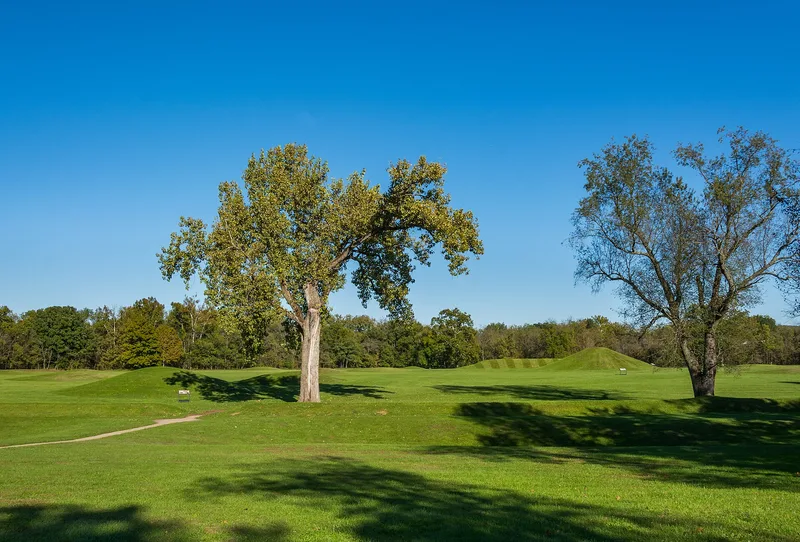
Mound City Group is a cluster of Hopewellian burial mounds on high ground above the Scioto River near Chillicothe, Ohio. A low earthen wall encloses about 13 acres holding 23 mounds, with two more just outside. Most were built over the burned sites of charnel houses, where the dead were prepared, and then capped with gravel. Looting and farming damaged the site, and in 1917 levelling for Camp Sherman severely disrupted most of the mounds. Reconstruction began in the 1920s and continued from the late 1950s and 1960s. It was proclaimed a national monument in 1923. The form values it for its link to the 1840s work of Squier and Davis, which helped found American archeology, and for what it has taught about the Hopewell, who made art and offerings from copper, obsidian, shell and mica. It is also considered one of the best places for the public to see Hopewellian funerary features.
Machine-generated summary. This summary was generated by a language model from the official nomination document and has not been reviewed line by line by an editor. It may contain errors. Check the source document before relying on any detail. Source: nomination document (PDF) · catalog entry. Generated October 2026 (model claude-sonnet-5-5, prompt v1.0-2026-10-29).
| Areas of significance | Prehistoric, Transportation, Religion |
|---|---|
| Acreage | 67.5 |
| Boundary source | NPS cultural-resource GIS polygon |
| Full listing page | Mound City Group National Monument (property record) |
What listing means for this property
This is a historic district. Buildings within its boundary are either contributing (they add to the district's significance) or non-contributing. Owners of contributing income-producing buildings can claim the 20% federal rehabilitation tax credit; homeowners should look at state credits. National Register districts impose no design review by themselves; a local historic district ordinance, if one exists, does (the difference explained).
General information, not legal or tax advice. Rules change; confirm with your State Historic Preservation Office or a qualified adviser.