Kossuth Colony Historic District

Why it's listed
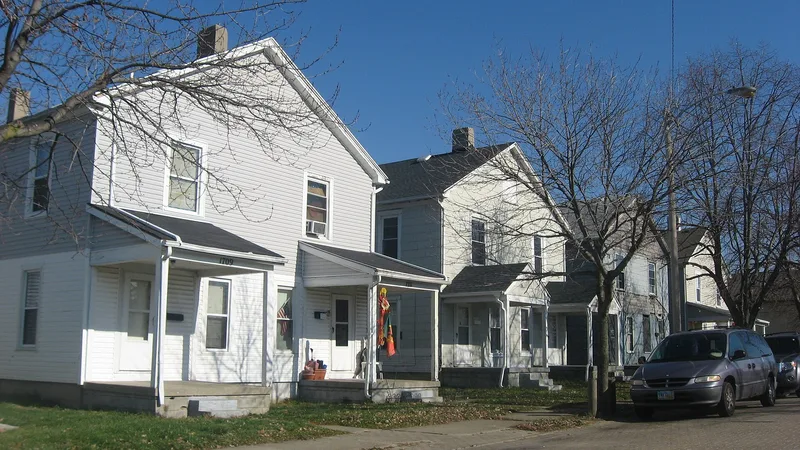
Forty of the original houses from the Kossuth Colony still line Baltimore Street, Mack Avenue and Notre Dame Avenue in northeast Dayton. Thirty are two-story frame double houses with four-bay facades and two entries; ten one-story versions stand on Baltimore Street. The colony was founded in 1906 by labor contractor Jacob D. Moskowitz to house Hungarian immigrant workers for the Barney and Smith Car Works, which was expanding into steel railroad cars. Each house held two families, and attics served as dormitories for unmarried boarders. A tall wooden fence surrounded the settlement, a watchman guarded the gate, and residents were paid partly in brass script spendable at Moskowitz's store. Despite these conditions, families kept their customs, foods and celebrations. After the 1913 flood, the fence decayed, the car works fell into receivership, and workers moved on. The company was sold in 1921, and Moskowitz sold his properties. The surviving houses record a distinctive chapter in Dayton's immigrant history.
Machine-generated summary. This summary was generated by a language model from the official nomination document and has not been reviewed line by line by an editor. It may contain errors. Check the source document before relying on any detail. Source: nomination document (PDF) · catalog entry. Generated October 2026 (model claude-sonnet-5-5, prompt v1.0-2026-10-29).
| Period of significance | 1906-1915 |
|---|---|
| Styles | Vernacular multiple dwellings |
| Areas of significance | Community Planning and Development, European, Social History |
| Acreage | 10.5 |
| Boundary source | NPS cultural-resource GIS polygon |
| Full listing page | Kossuth Colony Historic District (property record) |
What listing means for this property
This is a historic district. Buildings within its boundary are either contributing (they add to the district's significance) or non-contributing. Owners of contributing income-producing buildings can claim the 20% federal rehabilitation tax credit; homeowners should look at state credits. National Register districts impose no design review by themselves; a local historic district ordinance, if one exists, does (the difference explained).
General information, not legal or tax advice. Rules change; confirm with your State Historic Preservation Office or a qualified adviser.