Kingwood Center (Additional Documentation)

Why it's listed
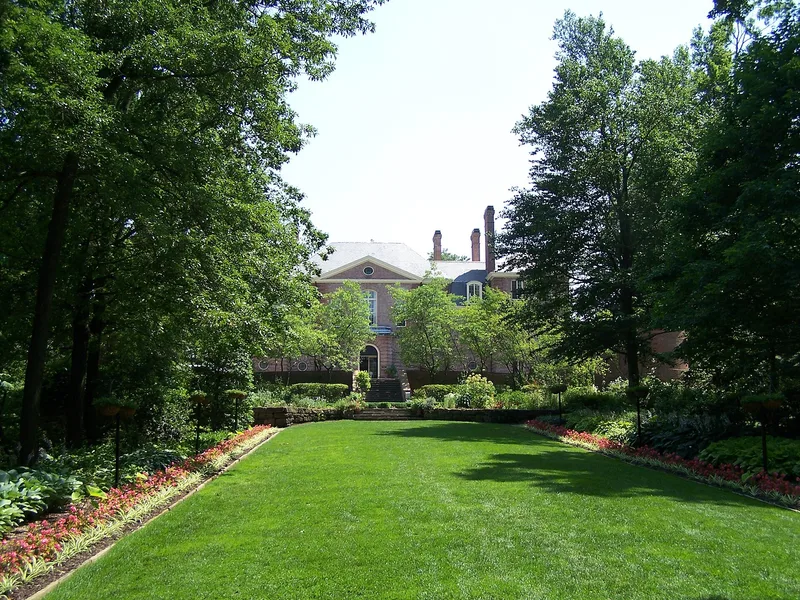
Kingwood Center is a 47-acre estate in Mansfield, Ohio, combining a Georgian Revival mansion, formal gardens, and nature trails. Kingwood Hall, designed by C. Mack of Cleveland and finished in 1926, is a symmetrical brick building with a tall hipped roof, brick quoin-like banding, and wings with mansard roofs. Inside are 27 major rooms, mostly with original furnishings, including French furniture and hand-painted wallpaper in the dining room. In 1932 a U-shaped group of brick outbuildings was added, including a poultry house, a stable and a storage building, together with a tower. Greenhouses were replaced in 1960 and a service building was added in 1968. The grounds are known for formal perennial gardens, French and Italian statuary, and trails with over 130 native Ohio species. Builder Charles Kelley King, an Ohio Brass Company engineer who rose to chairman, left the property to the public with an endowment for its perpetual care. It is now managed as a botanic garden and museum by a foundation.
Machine-generated summary. This summary was generated by a language model from the official nomination document and has not been reviewed line by line by an editor. It may contain errors. Check the source document before relying on any detail. Source: nomination document (PDF) · catalog entry. Generated October 2026 (model claude-sonnet-5-5, prompt v1.0-2026-10-29).
| Period of significance | 1926, 1932 (specific dates) |
|---|---|
| Styles | Georgian revival |
| Areas of significance | Landscape Architecture, Architecture |
| Acreage | 47 |
| Boundary source | NPS cultural-resource GIS polygon |
| Full listing page | Kingwood Center (Additional Documentation) (property record) |
What listing means for this property
This is a historic district. Buildings within its boundary are either contributing (they add to the district's significance) or non-contributing. Owners of contributing income-producing buildings can claim the 20% federal rehabilitation tax credit; homeowners should look at state credits. National Register districts impose no design review by themselves; a local historic district ordinance, if one exists, does (the difference explained).
General information, not legal or tax advice. Rules change; confirm with your State Historic Preservation Office or a qualified adviser.