Kenyon College

Why it's listed
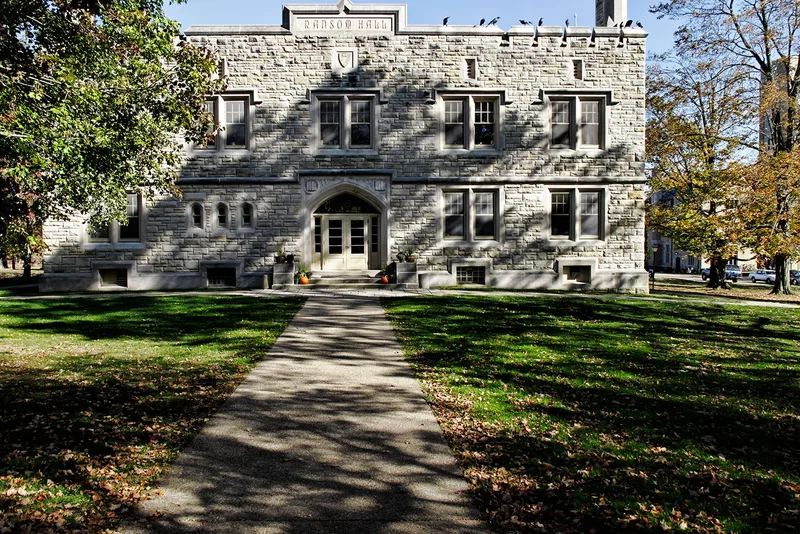
Kenyon College and part of Gambier Village occupy the crown of Gambier Hill, about 200 feet above the Kokosing River. Bishop Philander Chase chose the site in July 1825 for the college he founded in 1824, the first private college in Ohio. Work on Old Kenyon began in 1826, and Middle Path was laid out under President Douglas as a replacement for the original grand avenue plan. Early frame buildings were replaced by structures of local light brown sandstone in the Gothic revival style, with pointed arch windows, buttresses, crenellations and pinnacles. Notable buildings include Old Kenyon, Rosse Hall, Bexley Hall, Ascension Hall and the Church of the Holy Spirit. Designers included Henry Roberts, William Tinsley and C.F. Schweinfurth. Kenyon was the only Ohio college of the early 19th century to build in this style, and its campus is described as the state's most unified Gothic revival college campus. Some later buildings, such as Chalmers Library, are less sympathetic to the older fabric.
Machine-generated summary. This summary was generated by a language model from the official nomination document and has not been reviewed line by line by an editor. It may contain errors. Check the source document before relying on any detail. Source: nomination document (PDF) · catalog entry. Generated October 2026 (model claude-sonnet-5-5, prompt v1.0-2026-10-29).
| Period of significance | 1829-1963 |
|---|---|
| Styles | Gothic Revival (with Greek Revival Rosse Hall and Victorian Gothic Church of the Holy Spirit) |
| Areas of significance | Architecture |
| Acreage | 24 |
| Boundary source | NPS cultural-resource GIS polygon |
| Full listing page | Kenyon College (property record) |
What listing means for this property
This is a historic district. Buildings within its boundary are either contributing (they add to the district's significance) or non-contributing. Owners of contributing income-producing buildings can claim the 20% federal rehabilitation tax credit; homeowners should look at state credits. National Register districts impose no design review by themselves; a local historic district ordinance, if one exists, does (the difference explained).
General information, not legal or tax advice. Rules change; confirm with your State Historic Preservation Office or a qualified adviser.