Inverness Club

Why it's listed
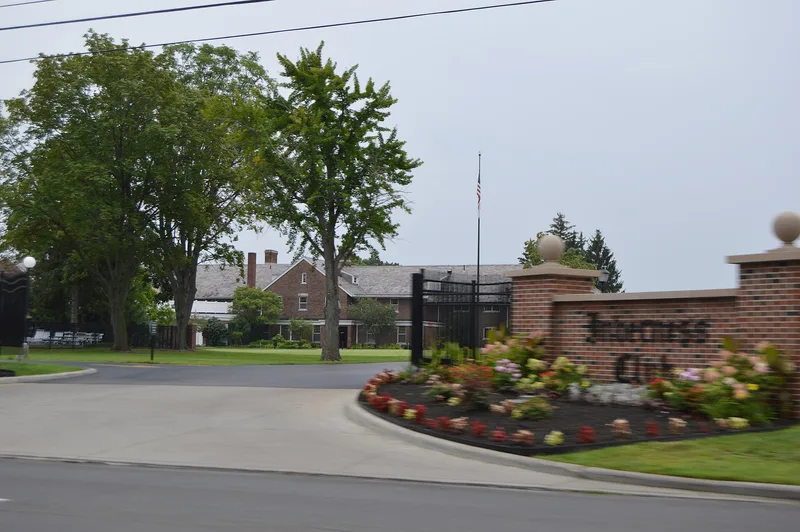
Inverness Club is a private golf club on Dorr Street in western Toledo, Ohio. It began in 1903 with a simple nine-hole course on 78 acres, and the grounds now cover about 250 acres. In 1918-19 Donald Ross redesigned the course to championship standards, and the club built a brick clubhouse, pro shop and manager's residence at the same time. The clubhouse, designed by Toledo's Devore Company, mixes English Tudor and Arts and Crafts features and replaced two earlier clubhouses lost to fire. Later additions such as the pool, tennis courts and maintenance sheds are screened by plantings, so the landscape still resembles its 1919 appearance. The club is significant for recreation and landscape architecture. It hosted U.S. Opens in 1920 and 1931, several invitational tournaments in the late 1930s, and later major events including the 1986 PGA Championship. Byron Nelson served as its professional from 1940 to 1944.
Machine-generated summary. This summary was generated by a language model from the official nomination document and has not been reviewed line by line by an editor. It may contain errors. Check the source document before relying on any detail. Source: nomination document (PDF) · catalog entry. Generated October 2026 (model claude-sonnet-5-5, prompt v1.0-2026-10-29).
| Period of significance | 1918-1944 |
|---|---|
| Styles | Late 19th/20th Century Revivals: Tudor Revival; Late 19th/20th Century American: Craftsman |
| Areas of significance | Landscape Architecture, Entertainment/Recreation |
| Acreage | 203 |
| Boundary source | NPS cultural-resource GIS polygon |
| Full listing page | Inverness Club (property record) |
What listing means for this property
This is a historic district. Buildings within its boundary are either contributing (they add to the district's significance) or non-contributing. Owners of contributing income-producing buildings can claim the 20% federal rehabilitation tax credit; homeowners should look at state credits. National Register districts impose no design review by themselves; a local historic district ordinance, if one exists, does (the difference explained).
General information, not legal or tax advice. Rules change; confirm with your State Historic Preservation Office or a qualified adviser.