Idora Park

Why it's listed
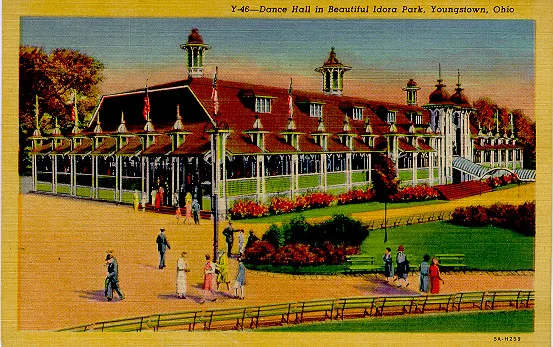
Idora Park is a 27-acre amusement park on a bluff overlooking Mill Creek valley in southwestern Youngstown, Ohio. It opened in 1899 as Terminal Park at the end of a trolley line and was renamed Idora Park the following year. Surviving resources include the large ballroom, an octagonal merry-go-round building, a penny arcade, a former bath house with a Georgian Revival portico, picnic shelters, and two wooden roller coasters, the Jack Rabbit of 1910 and the Wildcat. Fires in 1984 and 1986 destroyed several buildings and part of the Wildcat, and the park closed in 1984, but most major features remain. The park is significant for entertainment and recreation history, showing how streetcar-era amusement parks developed through the Big Band years, and for its resort-style wooden architecture with brackets, latticework and exotic details. It also reflects the industrial growth of the Mahoning Valley and its steel economy.
Machine-generated summary. This summary was generated by a language model from the official nomination document and has not been reviewed line by line by an editor. It may contain errors. Check the source document before relying on any detail. Source: nomination document (PDF) · catalog entry. Generated October 2026 (model claude-sonnet-5-5, prompt v1.0-2026-10-29).
| Period of significance | 1899-1943 |
|---|---|
| Styles | Colonial Revival, Moderne, Other: Italianate, Other: Moorish |
| Areas of significance | Entertainment/Recreation, Architecture |
| Acreage | 27 |
| Boundary source | NPS cultural-resource GIS polygon |
| Full listing page | Idora Park (property record) |
What listing means for this property
This is a historic district. Buildings within its boundary are either contributing (they add to the district's significance) or non-contributing. Owners of contributing income-producing buildings can claim the 20% federal rehabilitation tax credit; homeowners should look at state credits. National Register districts impose no design review by themselves; a local historic district ordinance, if one exists, does (the difference explained).
Noted as vacant in the nomination. Nomination documents can be decades old; current status may differ. If you are considering buying an empty listed property, read the due-diligence checklist.
General information, not legal or tax advice. Rules change; confirm with your State Historic Preservation Office or a qualified adviser.