Hudson Historic District (Boundary Increase II)

The National Park Service has not published a boundary polygon for this district; the map shows the listed properties inside it and the district's reference point.
Why it's listed
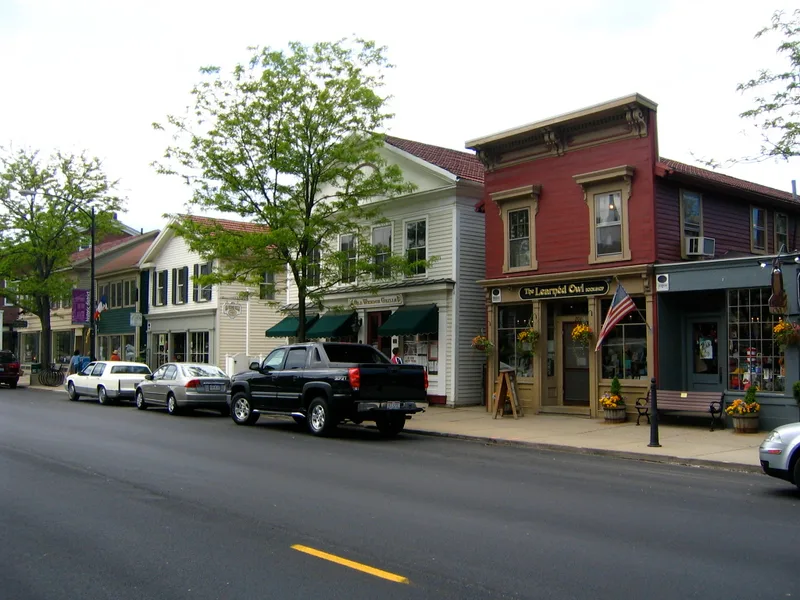
Hudson's historic district surrounds the Village Green in Summit County, Ohio, and takes in about 70 acres of houses, churches, schools and shops. Settled after 1799 by David Hudson and his partners from Connecticut, the town built up most heavily in the 1820s, 1830s and 1840s, and the district keeps many buildings from that period in Greek Revival, Federal, Tuscan, Gothic Revival and plain vernacular styles. Members of the Porter family, including Simeon Porter, designed many early houses and the 1865 Congregational Church. After fires in 1892 and 1911, a village ordinance required fireproof materials, so brick and stone shops now face the Green. The Clock Tower of 1912, a gift from James W. Ellsworth, is a local landmark. The district also holds sites tied to Owen Brown and his son John Brown, and it shows how an early Western Reserve town was laid out and built.
Machine-generated summary. This summary was generated by a language model from the official nomination document and has not been reviewed line by line by an editor. It may contain errors. Check the source document before relying on any detail. Source: nomination document (PDF) · catalog entry. Generated October 2026 (model claude-sonnet-5-5, prompt v1.0-2026-10-29).
| Period of significance | 1806-1912 |
|---|---|
| Styles | Greek Revival, Federal, Western Reserve, Tuscan, Gothic Revival, and vernacular |
| Areas of significance | Community Planning and Development, Architecture |
| Acreage | 14.88 |
| Boundary source | not published |
| Full listing page | Hudson Historic District (Boundary Increase II) (property record) |
What listing means for this property
This is a historic district. Buildings within its boundary are either contributing (they add to the district's significance) or non-contributing. Owners of contributing income-producing buildings can claim the 20% federal rehabilitation tax credit; homeowners should look at state credits. National Register districts impose no design review by themselves; a local historic district ordinance, if one exists, does (the difference explained).
General information, not legal or tax advice. Rules change; confirm with your State Historic Preservation Office or a qualified adviser.