Historic Associate Reformed Church and Cemetery

Why it's listed
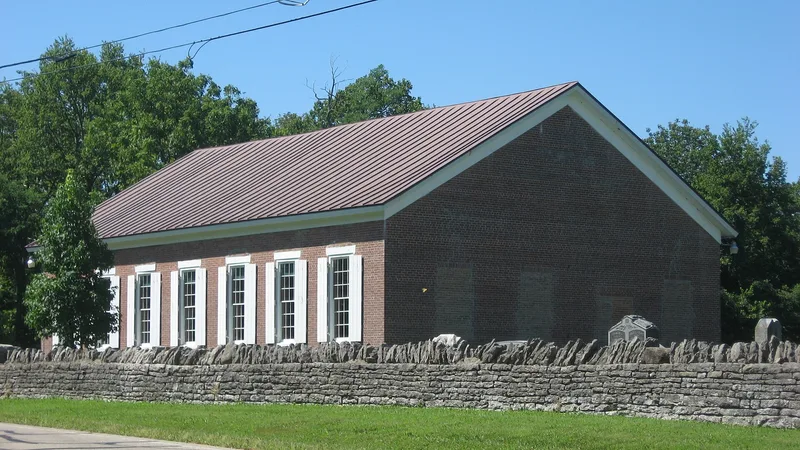
Hopewell Church is a single-story brick meeting house built in 1825 on rolling land above the East Fork of Four Mile Creek, about a mile northwest of Morning Sun in Preble County, Ohio. It sits with an 8.7-acre cemetery, a dry-laid limestone fence, a spring enclosure and a 1930s privy. The congregation began in 1808 with Scots-Irish settlers from Kentucky and South Carolina who left in opposition to slavery, and it grew into one of the largest congregations west of Pittsburgh. It later sponsored daughter churches in Fairhaven, Oxford, College Corner and Morning Sun. The building shows the plain, symmetrical style of early meeting houses, with twelve-over-twelve windows, Flemish bond brick on the east wall, twin entrances in the south gable end and a hewn timber roof truss. The cemetery holds early carved monuments, many by stonecutter Oscar M. Pay. The church still holds monthly services.
Machine-generated summary. This summary was generated by a language model from the official nomination document and has not been reviewed line by line by an editor. It may contain errors. Check the source document before relying on any detail. Source: nomination document (PDF) · catalog entry. Generated October 2026 (model claude-sonnet-5-5, prompt v1.0-2026-10-29).
| Period of significance | 1825-1915 |
|---|---|
| Styles | Federal vernacular |
| Areas of significance | Architecture, Religion |
| Boundary source | NPS cultural-resource GIS polygon |
| Full listing page | Historic Associate Reformed Church and Cemetery (property record) |
What listing means for this property
This is a historic district. Buildings within its boundary are either contributing (they add to the district's significance) or non-contributing. Owners of contributing income-producing buildings can claim the 20% federal rehabilitation tax credit; homeowners should look at state credits. National Register districts impose no design review by themselves; a local historic district ordinance, if one exists, does (the difference explained).
General information, not legal or tax advice. Rules change; confirm with your State Historic Preservation Office or a qualified adviser.