Harding-Jones Paper Company District

Why it's listed
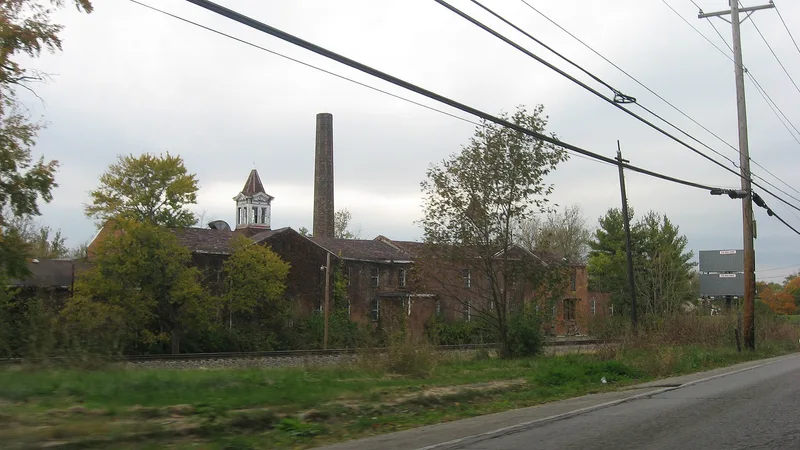
Along South Main Street in Excello, Ohio, a paper mill, two houses, a carriage house and a canal lock make up a small industrial district. A. E. Harding, an English-born papermaker, founded the mill in 1865 near the first lock completed on the Miami-Erie Canal. The original wood building was replaced by a three-story brick mill in 1871, which still forms the center of the complex alongside later additions. The mill was the first west of the Allegheny Mountains to make fine writing paper, and it was later reorganized as the Harding-Jones Paper Company. Harding's second house, built in 1875, has a hip roof, bracketed cornice and elliptical fanlight, while a frame carriage house with a three-story tower stands to its north. The limestone lock, now a public park, reflects the role of the canals in Ohio commerce. The mill remains in production today, with rollers installed in 1897 still in use.
Machine-generated summary. This summary was generated by a language model from the official nomination document and has not been reviewed line by line by an editor. It may contain errors. Check the source document before relying on any detail. Source: nomination document (PDF) · catalog entry. Generated October 2026 (model claude-sonnet-5-5, prompt v1.0-2026-10-29).
| Period of significance | 19th Century (specific dates 1827 canal lock; 1871 mill; 1875 house) |
|---|---|
| Areas of significance | Industry, Commerce, Architecture |
| Acreage | 18 |
| Boundary source | NPS cultural-resource GIS polygon |
| Full listing page | Harding-Jones Paper Company District (property record) |
What listing means for this property
This is a historic district. Buildings within its boundary are either contributing (they add to the district's significance) or non-contributing. Owners of contributing income-producing buildings can claim the 20% federal rehabilitation tax credit; homeowners should look at state credits. National Register districts impose no design review by themselves; a local historic district ordinance, if one exists, does (the difference explained).
General information, not legal or tax advice. Rules change; confirm with your State Historic Preservation Office or a qualified adviser.