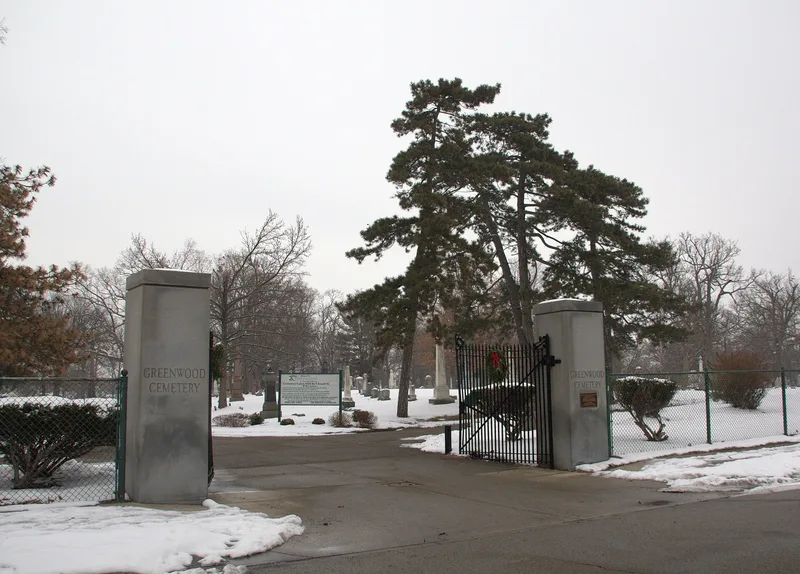
Greenwood Cemetery

Why it's listed
Greenwood Cemetery covers 26 acres on the northeast side of Hamilton, Ohio, and is laid out in the rural cemetery tradition of the mid-1800s. Hamilton citizens organized it in 1847-48 because the older burying grounds in town were being crowded by growth. Rolling hills, winding drives, a pond with a statue of a young woman, and mixed plantings of oaks, maples, willows and catalpa create a park-like setting. Trustees consulted landscape designer Adolph Strauch of Spring Grove Cemetery in Cincinnati. Notable structures include a Richardsonian Romanesque public receiving vault of 1892, family vaults for the Howell and McGriff families, a caretaker's shed with upturned pagoda-like eaves, and a veterans section with a 1936 memorial. Victorian obelisks, ark-shaped markers, angels and urns fill the grounds. The cemetery was recognized for its social history, architecture and landscape design, with a period of significance of 1848 to 1936.
Machine-generated summary. This summary was generated by a language model from the official nomination document and has not been reviewed line by line by an editor. It may contain errors. Check the source document before relying on any detail. Source: nomination document (PDF) · catalog entry. Generated October 2026 (model claude-sonnet-5-5, prompt v1.0-2026-10-29).
| Period of significance | 1848-1936 |
|---|---|
| Styles | Late Victorian: Romanesque (Richardsonian Romanesque); Mid-19th Century: Exotic Revival |
| Areas of significance | Social History, Architecture, Landscape Architecture |
| Acreage | 69.5 |
| Boundary source | NPS cultural-resource GIS polygon |
| Full listing page | Greenwood Cemetery (property record) |
What listing means for this property
This is a historic district. Buildings within its boundary are either contributing (they add to the district's significance) or non-contributing. Owners of contributing income-producing buildings can claim the 20% federal rehabilitation tax credit; homeowners should look at state credits. National Register districts impose no design review by themselves; a local historic district ordinance, if one exists, does (the difference explained).
General information, not legal or tax advice. Rules change; confirm with your State Historic Preservation Office or a qualified adviser.