Grandview Cemetery

Why it's listed
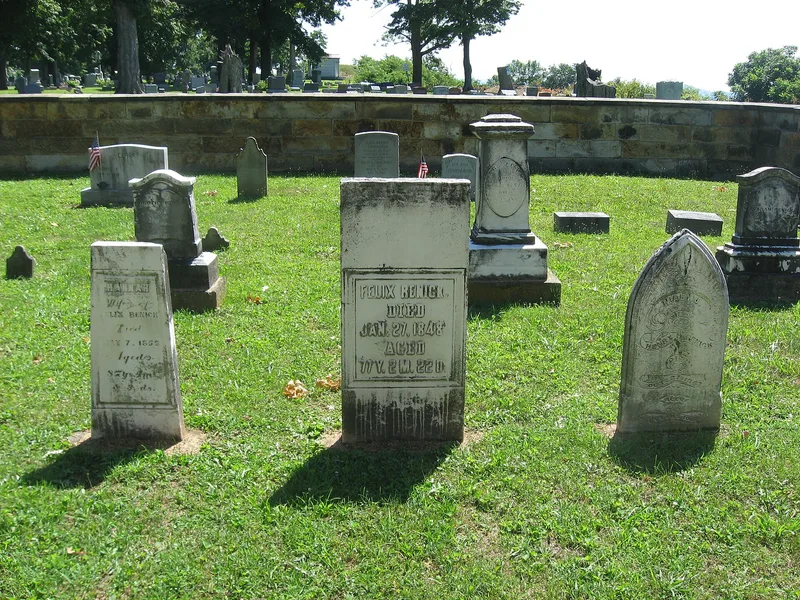
Grandview Cemetery occupies about 90 acres of rolling hilltop southwest of Chillicothe, with views over the Scioto River Valley and toward Paint Creek. The first land was bought in 1845 at a public sale of estates, and the full acreage was assembled by the 1890s. Early deeds restricted structures, walls over four and one-half feet and monuments judged in poor taste. The grounds include a Civil War Union Veterans monument, a speaker's shelter, a cut-stone Gothic receiving vault, and mausoleums and crypts in Gothic, Greek, Romanesque and classical revival styles. The oldest part is the Renick Enclosure, walled in stone. Those buried here include Nathaniel Massie, founder of Chillicothe, and Ohio governors Edward Tiffin, Thomas Worthington, Duncan McArthur and William Allen. General Joshua Sill, archaeologist Edwin Davis, cartoonist Billy Ireland and paper scholar Dard Hunter are also interred. The property was listed for its associations with early Ohio leaders and for its monuments and landscape.
Machine-generated summary. This summary was generated by a language model from the official nomination document and has not been reviewed line by line by an editor. It may contain errors. Check the source document before relying on any detail. Source: nomination document (PDF) · catalog entry. Generated October 2026 (model claude-sonnet-5-5, prompt v1.0-2026-10-29).
| Styles | Gothic Revival, Greek Revival, Romanesque and early twentieth-century classical revival influences |
|---|---|
| Areas of significance | Community Planning and Development, Landscape Architecture, Architecture, Social History |
| Acreage | 91.6 |
| Boundary source | NPS cultural-resource GIS polygon |
| Full listing page | Grandview Cemetery (property record) |
What listing means for this property
This is a historic district. Buildings within its boundary are either contributing (they add to the district's significance) or non-contributing. Owners of contributing income-producing buildings can claim the 20% federal rehabilitation tax credit; homeowners should look at state credits. National Register districts impose no design review by themselves; a local historic district ordinance, if one exists, does (the difference explained).
General information, not legal or tax advice. Rules change; confirm with your State Historic Preservation Office or a qualified adviser.