Godwin-Knowles House

The National Park Service has not published a boundary polygon for this district; the map shows the listed properties inside it and the district's reference point.
Why it's listed
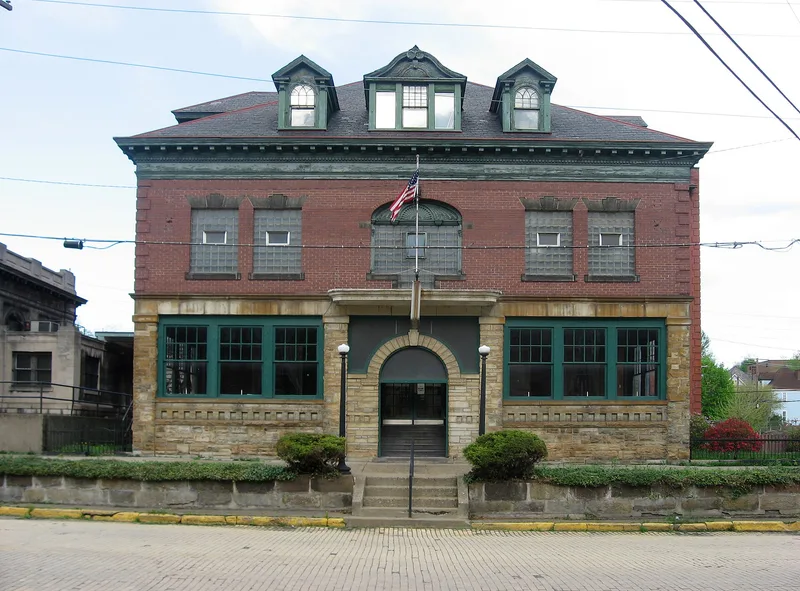
Built in the early 1890s by Goodwin, one of East Liverpool's pottery manufacturers, this brick Colonial Revival house at 422 Broadway originally had a symmetrical facade, a rounded corner tower with a conical roof, and a front porch with paired Ionic columns. Homer Knowles, a nephew associated with the Knowles, Taylor, Knowles Pottery, later lived there. The house is nearly identical in original design to another Goodwin property at 5th and Jackson. In 1910 the Masonic Lodge bought it and enlarged it at front and rear, extending the facade and enclosing the porch. Careful matching of the roof pitch, dormers and window trim made the changes hard to detect. It has served as the Masonic Temple ever since. It is recognized for its link to the city's pottery industry and its long social role, and it remains one of the city's grandest houses despite the alterations.
Machine-generated summary. This summary was generated by a language model from the official nomination document and has not been reviewed line by line by an editor. It may contain errors. Check the source document before relying on any detail. Source: nomination document (PDF) · catalog entry. Generated October 2026 (model claude-sonnet-5-5, prompt v1.0-2026-10-29).
| Period of significance | 1890's |
|---|---|
| Styles | Colonial Revival influence |
| Areas of significance | Industry, Social History |
| Acreage | 0.9 |
| Boundary source | not published |
| Full listing page | Godwin-Knowles House (property record) |
What listing means for this property
This is a historic district. Buildings within its boundary are either contributing (they add to the district's significance) or non-contributing. Owners of contributing income-producing buildings can claim the 20% federal rehabilitation tax credit; homeowners should look at state credits. National Register districts impose no design review by themselves; a local historic district ordinance, if one exists, does (the difference explained).
General information, not legal or tax advice. Rules change; confirm with your State Historic Preservation Office or a qualified adviser.