German Village Historic District

Why it's listed
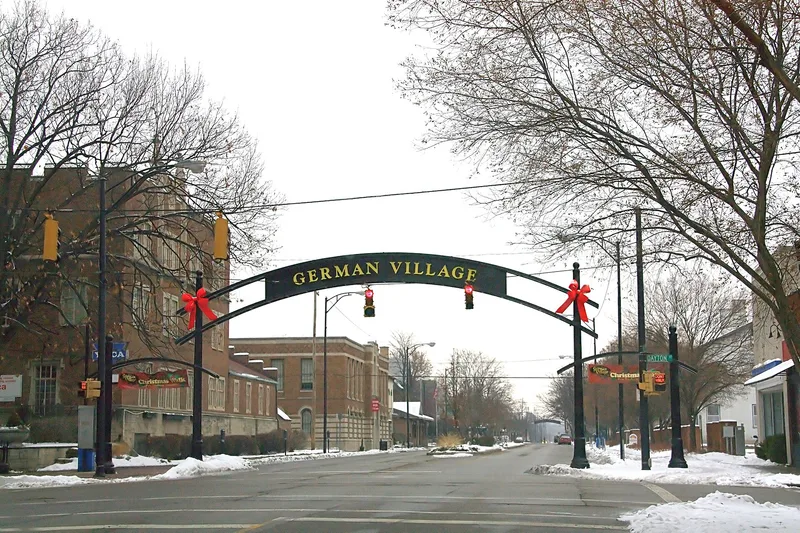
German Village is an eight-block historic neighborhood just north of downtown Hamilton, Ohio, along the Great Miami River. Platted in 1794 and recorded in 1802 by Israel Ludlow, it became the city's first main residential area. Founders of the largest manufacturing firms built homes here, alongside middle-management families and workers, whose smaller houses sit along the alleys. The district holds 177 contributing buildings, mostly two- and three-story houses built between 1829 and 1931, with the greatest growth from 1850 to 1913. Styles range from vernacular Side Hall plan houses to Italianate mansions, a Queen Anne house with a turret, and the Lane-Hooven House, an octagonal Gothic Revival residence of 1863. Residents included makers of farm machinery, steam engines, stoves, woolens and casters, reflecting the industries that drove Hamilton's growth, especially after the Civil War. Schools, a hospital, a church, a library and the YWCA also stand here. Many houses now hold multiple apartments, and the 1913 flood altered several buildings.
Machine-generated summary. This summary was generated by a language model from the official nomination document and has not been reviewed line by line by an editor. It may contain errors. Check the source document before relying on any detail. Source: nomination document (PDF) · catalog entry. Generated October 2026 (model claude-sonnet-5-5, prompt v1.0-2026-10-29).
| Period of significance | 1829-1931 |
|---|---|
| Styles | Italianate; Gothic Revival; Queen Anne; Octagon Mode; Side Hall plan; Shotgun |
| Areas of significance | Industry, Commerce, Architecture |
| Acreage | 45 |
| Boundary source | NPS cultural-resource GIS polygon |
| Full listing page | German Village Historic District (property record) |
What listing means for this property
This is a historic district. Buildings within its boundary are either contributing (they add to the district's significance) or non-contributing. Owners of contributing income-producing buildings can claim the 20% federal rehabilitation tax credit; homeowners should look at state credits. National Register districts impose no design review by themselves; a local historic district ordinance, if one exists, does (the difference explained).
General information, not legal or tax advice. Rules change; confirm with your State Historic Preservation Office or a qualified adviser.