German Village (Boundary Increase)

Why it's listed
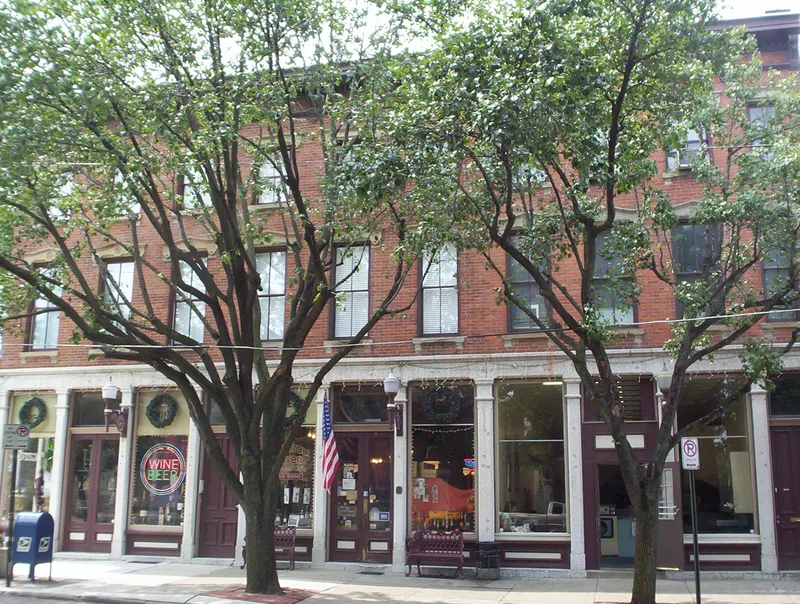
This 11-acre area lies against the northeast corner of German Village in Columbus and adds about 88 mostly residential buildings to the district. Early houses from the 1840s to 1860s are one-and-a-half-story brick on limestone foundations with slate gable roofs. Larger two-story brick homes followed in the 1860s and 1870s, and two-story frame houses date from 1880 to 1900. Buildings sit close to the street on narrow lots, and brick streets and sidewalks survive in places. The northern part was platted in 1848 as James Bryden's 2nd Addition, and the southern part as the Franklin County Infirmary Addition in 1884. The nomination presents the area as a representation of a 19th century German working class neighborhood, reflecting the building styles and spatial patterns of German settlers who arrived in large numbers after the 1830s. Many buildings have been rehabilitated, a process that began locally in the late 1950s. The area was added because its architecture matches the existing district.
Machine-generated summary. This summary was generated by a language model from the official nomination document and has not been reviewed line by line by an editor. It may contain errors. Check the source document before relying on any detail. Source: nomination document (PDF) · catalog entry. Generated October 2026 (model claude-sonnet-5-5, prompt v1.0-2026-10-29).
| Period of significance | 1800-1899 |
|---|---|
| Areas of significance | Architecture |
| Acreage | 11 |
| Boundary source | NPS cultural-resource GIS polygon |
| Full listing page | German Village (Boundary Increase) (property record) |
What listing means for this property
This is a historic district. Buildings within its boundary are either contributing (they add to the district's significance) or non-contributing. Owners of contributing income-producing buildings can claim the 20% federal rehabilitation tax credit; homeowners should look at state credits. National Register districts impose no design review by themselves; a local historic district ordinance, if one exists, does (the difference explained).
General information, not legal or tax advice. Rules change; confirm with your State Historic Preservation Office or a qualified adviser.