German Village

Why it's listed
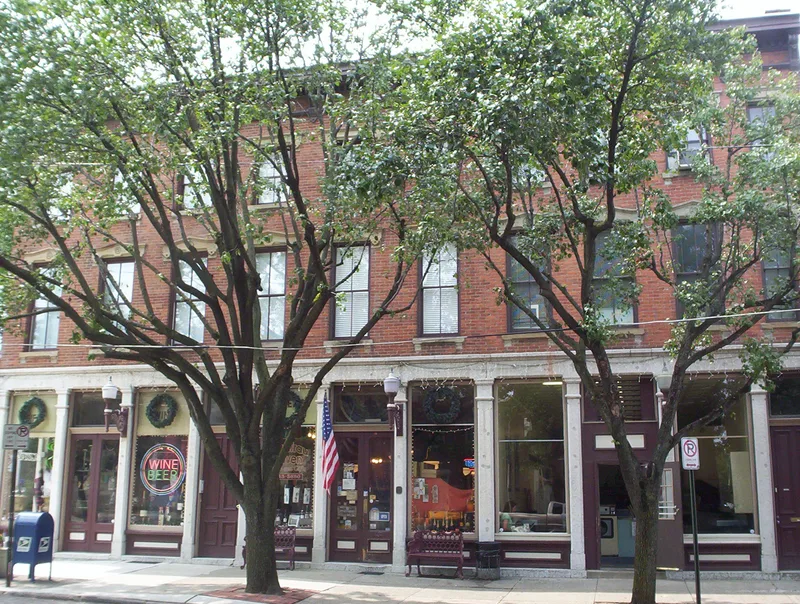
German Village is a 233-acre neighborhood just south of downtown Columbus, Ohio, made up of more than 1,800 structures. German immigrants began settling in Columbus in 1812, and by 1890 about 7,000 Germans lived on the south side. They built small brick cottages on limestone foundations, later followed by larger two-story brick houses and Italianate Victorian homes, many around Schiller Park. Brick streets and sidewalks, narrow lots and houses set close to the street gave the area a walking-village character. The community declined after the First World War, Prohibition and postwar migration, and city studies recommended clearance. An expressway took the northern third. Restoration began in the late 1950s with one individual, led to the German Village Society in 1960, city recognition as a historic district, rezoning and design controls. Nearly two-thirds of the buildings have since been restored with private funds, and the district is valued as a well-preserved nineteenth-century area.
Machine-generated summary. This summary was generated by a language model from the official nomination document and has not been reviewed line by line by an editor. It may contain errors. Check the source document before relying on any detail. Source: nomination document (PDF) · catalog entry. Generated October 2026 (model claude-sonnet-5-5, prompt v1.0-2026-10-29).
| Period of significance | 1820-1900 |
|---|---|
| Styles | Italianate Victorian, with early "Dutch" style brick cottages and Gothic Revival (St. Mary's Church) |
| Areas of significance | Architecture |
| Acreage | 230 |
| Boundary source | NPS cultural-resource GIS polygon |
| Full listing page | German Village (property record) |
What listing means for this property
This is a historic district. Buildings within its boundary are either contributing (they add to the district's significance) or non-contributing. Owners of contributing income-producing buildings can claim the 20% federal rehabilitation tax credit; homeowners should look at state credits. National Register districts impose no design review by themselves; a local historic district ordinance, if one exists, does (the difference explained).
General information, not legal or tax advice. Rules change; confirm with your State Historic Preservation Office or a qualified adviser.