Fort Hayes

Why it's listed
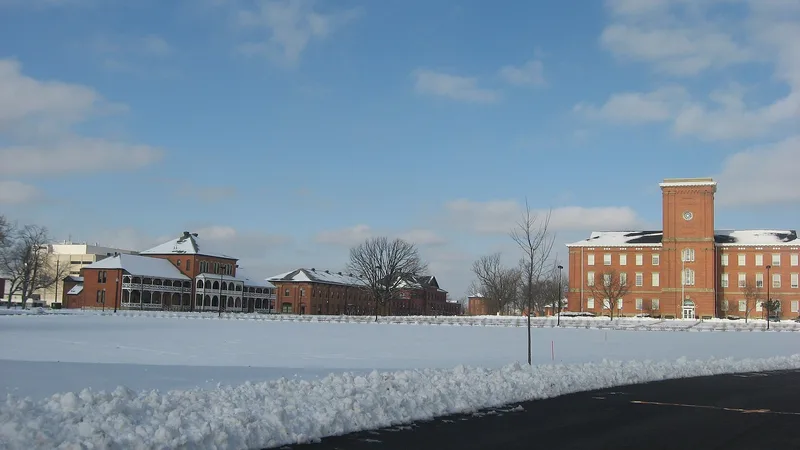
Fort Hayes is a military post of about 70 acres close to downtown Columbus, Ohio. Created in 1863 as the Columbus Arsenal for making and storing war materiel, it became an Army recruiting depot called Columbus Barracks after the Civil War and was renamed in 1922 for Rutherford B. Hayes. The initial buildings were designed and built under Colonel T. C. Bradford. Its centerpiece is the 1864 Arsenal, a three-story brick Tuscan Revival building with a five-story tower, long in almost continuous military use. Other surviving structures include a late-1890s gatehouse, a 1910 administration building, a 1907 post exchange and gym, a 1908 hospital, and officers' family quarters begun in 1894. The post was listed as the oldest federal military installation in continuous use in Ohio. It keeps much of its nineteenth-century character, and the Arsenal is believed to be the only surviving Bradford-built structure in the country. Federal plans anticipated its disposal by 1972.
Machine-generated summary. This summary was generated by a language model from the official nomination document and has not been reviewed line by line by an editor. It may contain errors. Check the source document before relying on any detail. Source: nomination document (PDF) · catalog entry. Generated October 2026 (model claude-sonnet-5-5, prompt v1.0-2026-10-29).
| Styles | Tuscan Revival (Building 62, the Arsenal) |
|---|---|
| Areas of significance | Military, Architecture |
| Acreage | 70 |
| Boundary source | NPS cultural-resource GIS polygon |
| Full listing page | Fort Hayes (property record) |
What listing means for this property
This is a historic district. Buildings within its boundary are either contributing (they add to the district's significance) or non-contributing. Owners of contributing income-producing buildings can claim the 20% federal rehabilitation tax credit; homeowners should look at state credits. National Register districts impose no design review by themselves; a local historic district ordinance, if one exists, does (the difference explained).
General information, not legal or tax advice. Rules change; confirm with your State Historic Preservation Office or a qualified adviser.