Forest Hill Historic District

Why it's listed
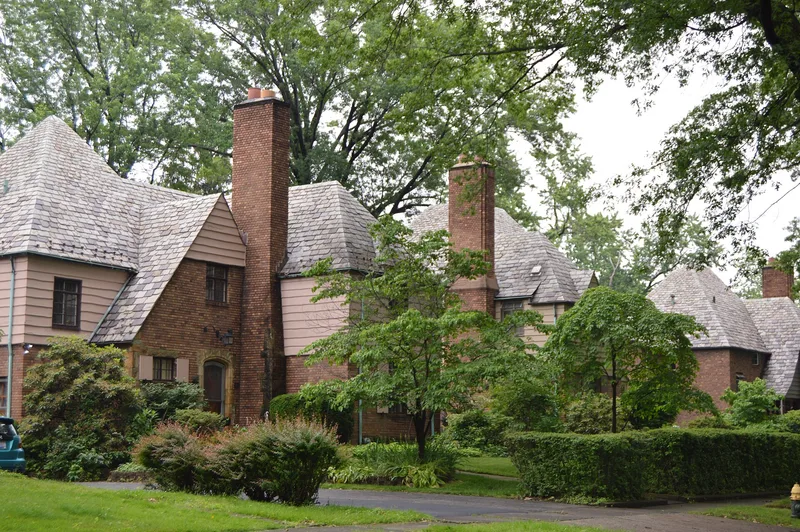
Forest Hill is a district of 81 single-family houses in the French Norman style, laid out in East Cleveland and Cleveland Heights in 1929-1930. John D. Rockefeller, Jr. built it through his Abeyton Realty Corporation on part of the family's longtime summer estate. New York architect Andrew J. Thomas designed nine house types of seven or eight rooms, with brick or half-timbered walls, slate or tile roofs, metal casement windows, and garages hidden in the basements. Streets curve, wiring is underground, and deed restrictions still govern fences and additions. Rockefeller envisioned a village of 600 homes with an inn, country club and apartments, but the project was abandoned as a financial failure after the houses and a business block were completed. Contemporary architectural journals praised it as a contribution to community planning standards. Alterations have been minor, including replaced driveway gates, street lamps and signs, and a few rear additions. The district was listed for its planning, its architecture, and its link to the Rockefeller family.
Machine-generated summary. This summary was generated by a language model from the official nomination document and has not been reviewed line by line by an editor. It may contain errors. Check the source document before relying on any detail. Source: nomination document (PDF) · catalog entry. Generated October 2026 (model claude-sonnet-5-5, prompt v1.0-2026-10-29).
| Period of significance | 1900- (specific dates 1929-1930) |
|---|---|
| Styles | French Norman |
| Areas of significance | Community Planning and Development, Architecture |
| Acreage | 25 |
| Boundary source | NPS cultural-resource GIS polygon |
| Full listing page | Forest Hill Historic District (property record) |
What listing means for this property
This is a historic district. Buildings within its boundary are either contributing (they add to the district's significance) or non-contributing. Owners of contributing income-producing buildings can claim the 20% federal rehabilitation tax credit; homeowners should look at state credits. National Register districts impose no design review by themselves; a local historic district ordinance, if one exists, does (the difference explained).
General information, not legal or tax advice. Rules change; confirm with your State Historic Preservation Office or a qualified adviser.