East North Broadway Historic District

Why it's listed
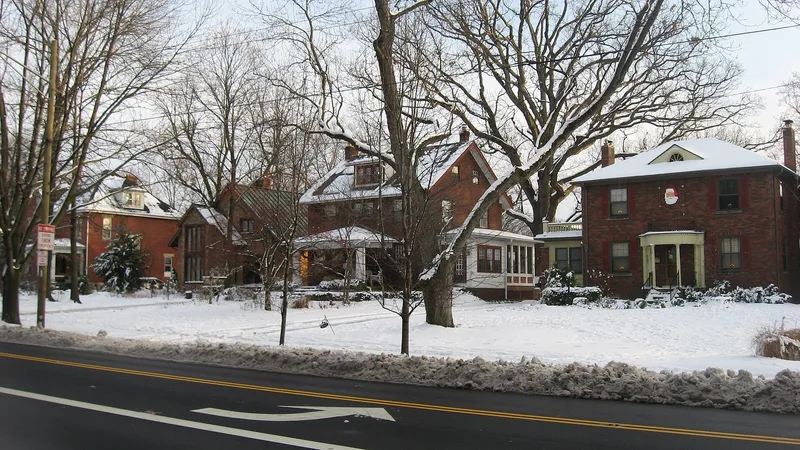
East North Broadway in Clintonville, Columbus, is a tree-lined residential street of about 117 primary buildings and 86 garages and outbuildings. Most are single-family houses built between the 1890s and late 1950s, with a school, two churches and an office building mixed in. Styles range from Queen Anne and Colonial Revival to Tudor Revival, Craftsman and mid-century designs. The street was laid out 100 feet wide with large lots and planned traffic circles, and early advertising promised that no home would cost less than $3,000. Sidewalks at Calumet Street still trace the outline of the removed circle. Architects such as James Boyd Martin and J. Edgar Outcalt designed several houses, and original owners included bankers, professionals and a former Ohio State University president. The street is listed for its consistent character and its concentration of larger, higher-style homes compared with neighboring streets.
Machine-generated summary. This summary was generated by a language model from the official nomination document and has not been reviewed line by line by an editor. It may contain errors. Check the source document before relying on any detail. Source: nomination document (PDF) · catalog entry. Generated October 2026 (model claude-sonnet-5-5, prompt v1.0-2026-10-29).
| Styles | Late Victorian (Queen Anne); 20th Century Revival (Colonial Revival, Tudor Revival, Late Gothic Revival); Bungalow/Craftsman; mid-century ranch |
|---|---|
| Areas of significance | Community Planning and Development, Architecture |
| Acreage | 58.5 |
| Boundary source | NPS cultural-resource GIS polygon |
| Full listing page | East North Broadway Historic District (property record) |
What listing means for this property
This is a historic district. Buildings within its boundary are either contributing (they add to the district's significance) or non-contributing. Owners of contributing income-producing buildings can claim the 20% federal rehabilitation tax credit; homeowners should look at state credits. National Register districts impose no design review by themselves; a local historic district ordinance, if one exists, does (the difference explained).
General information, not legal or tax advice. Rules change; confirm with your State Historic Preservation Office or a qualified adviser.