East Broad Street Historic District

Why it's listed
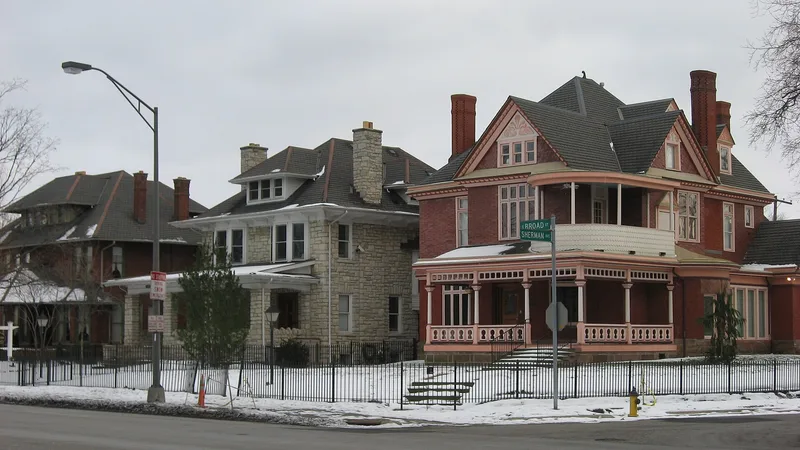
East Broad Street in Columbus developed as a fashionable avenue on the city's east side, and this district preserves much of that history. It holds 66 contributing buildings, among them large single-family houses with carriage houses, apartment buildings, East High School, Temple Tifereth Israel, and a 1928-31 Tudor Revival service station. Styles range from the 1856 Italianate Baker-Taylor House to the 1936-37 Art Deco Royal York Apartments, though most buildings are turn-of-the-century period revival designs. A plank road built in 1852, annexation in the 1870s, the park across the street, and a streetcar line encouraged growth. Prominent business leaders built many of the houses, and the former Governor's Residence of 1904 served as the official residence from 1919 to 1954. In the 1920s and 1930s, luxury apartment buildings and the automobile changed the street. Brick, stone, ornamentation and large landscaped lots give the district a cohesive appearance, and its 12 non-contributing elements are scattered.
Machine-generated summary. This summary was generated by a language model from the official nomination document and has not been reviewed line by line by an editor. It may contain errors. Check the source document before relying on any detail. Source: nomination document (PDF) · catalog entry. Generated October 2026 (model claude-sonnet-5-5, prompt v1.0-2026-10-29).
| Styles | Mixed styles from Italianate to Art Deco, mostly turn-of-the-century revival styles (Colonial Revival, Tudor Revival/Arts and Crafts, Neo-Classical Revival, Chateauesque, Second Renaissance Revival) |
|---|---|
| Areas of significance | Community Planning and Development, Architecture |
| Acreage | 26 |
| Boundary source | NPS cultural-resource GIS polygon |
| Full listing page | East Broad Street Historic District (property record) |
What listing means for this property
This is a historic district. Buildings within its boundary are either contributing (they add to the district's significance) or non-contributing. Owners of contributing income-producing buildings can claim the 20% federal rehabilitation tax credit; homeowners should look at state credits. National Register districts impose no design review by themselves; a local historic district ordinance, if one exists, does (the difference explained).
General information, not legal or tax advice. Rules change; confirm with your State Historic Preservation Office or a qualified adviser.