Dunbar Historic District

Why it's listed
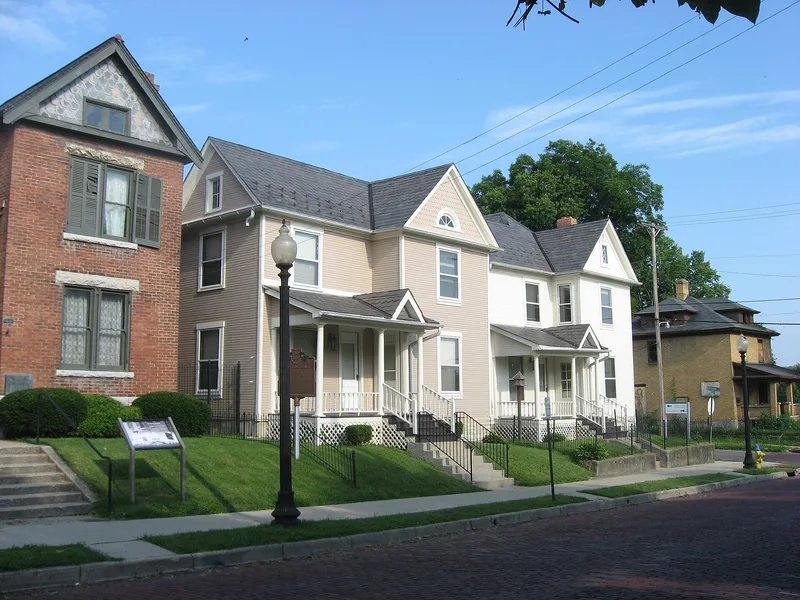
Three blocks of North Summit Street in Dayton, Ohio, along with a few buildings on nearby West First and West Second Streets, make up a small district built around the Paul Laurence Dunbar House. The buildings date largely from the last quarter of the nineteenth century. Most are brick houses in the High Victorian Italianate style, with rockfaced stone foundations, bracketed box cornices, polygonal bays and decorated metal window caps. At least one is a frame Eastlake house, described as the best preserved in the district. Several have wrought or cast iron fences. The district was drawn to give the Dunbar House, home of the celebrated Black poet, an architectural setting that helps visitors understand it. Nearby demolition and heavy renovation had damaged the surrounding historic character, so the boundaries include only the remaining buildings that contribute. Dunbar was born in Dayton in 1872 and gained national attention for his poetry. The nomination links the district to literature and to the social history of his career.
Machine-generated summary. This summary was generated by a language model from the official nomination document and has not been reviewed line by line by an editor. It may contain errors. Check the source document before relying on any detail. Source: nomination document (PDF) · catalog entry. Generated October 2026 (model claude-sonnet-5-5, prompt v1.0-2026-10-29).
| Period of significance | 1870 - 1918 |
|---|---|
| Styles | High Victorian Italianate and Eastlake |
| Areas of significance | Black, Architecture, Religion, Social History |
| Acreage | 6 |
| Boundary source | NPS cultural-resource GIS polygon |
| Full listing page | Dunbar Historic District (property record) |
What listing means for this property
This is a historic district. Buildings within its boundary are either contributing (they add to the district's significance) or non-contributing. Owners of contributing income-producing buildings can claim the 20% federal rehabilitation tax credit; homeowners should look at state credits. National Register districts impose no design review by themselves; a local historic district ordinance, if one exists, does (the difference explained).
General information, not legal or tax advice. Rules change; confirm with your State Historic Preservation Office or a qualified adviser.