Dublin High Street Historic District

The National Park Service has not published a boundary polygon for this district; the map shows the listed properties inside it and the district's reference point.
Why it's listed
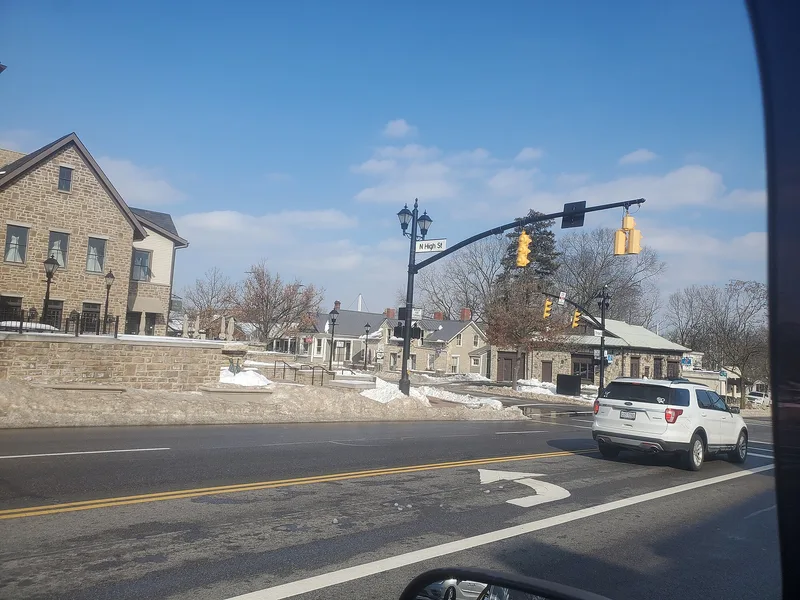
Dublin's High Street district covers four short blocks of a tree-lined street along the Scioto River, with buildings dating from 1826 to 1890. Early stone houses sit beside simple Victorian frame structures, serving as homes, small shops and antique stores. Dublin was the only town ever to develop in Washington Township and the first settled by early families, drawn by the river and established roads. Notable buildings include the Thomas House, a coursed-rubble Federal tavern of about 1832 built by John Sells for his son-in-law Zenas Hutchinson, later Dublin's first mayor. Others include a c. 1840 brick former tin shop and post office, an Italianate-influenced office with round-arched windows, a log structure beneath shingle siding, and a hotel and home linked to merchant Holcomb Tuller. A few newer small buildings intrude but do little to change the streetscape. The street remains quiet, with low traffic.
Machine-generated summary. This summary was generated by a language model from the official nomination document and has not been reviewed line by line by an editor. It may contain errors. Check the source document before relying on any detail. Source: nomination document (PDF) · catalog entry. Generated October 2026 (model claude-sonnet-5-5, prompt v1.0-2026-10-29).
| Period of significance | 1826-1890 |
|---|---|
| Styles | Vernacular, with Federal and Italianate-influenced buildings |
| Areas of significance | Commerce, Exploration/Settlement, Architecture |
| Boundary source | not published |
| Full listing page | Dublin High Street Historic District (property record) |
What listing means for this property
This is a historic district. Buildings within its boundary are either contributing (they add to the district's significance) or non-contributing. Owners of contributing income-producing buildings can claim the 20% federal rehabilitation tax credit; homeowners should look at state credits. National Register districts impose no design review by themselves; a local historic district ordinance, if one exists, does (the difference explained).
General information, not legal or tax advice. Rules change; confirm with your State Historic Preservation Office or a qualified adviser.