Diamond Historic District

Why it's listed
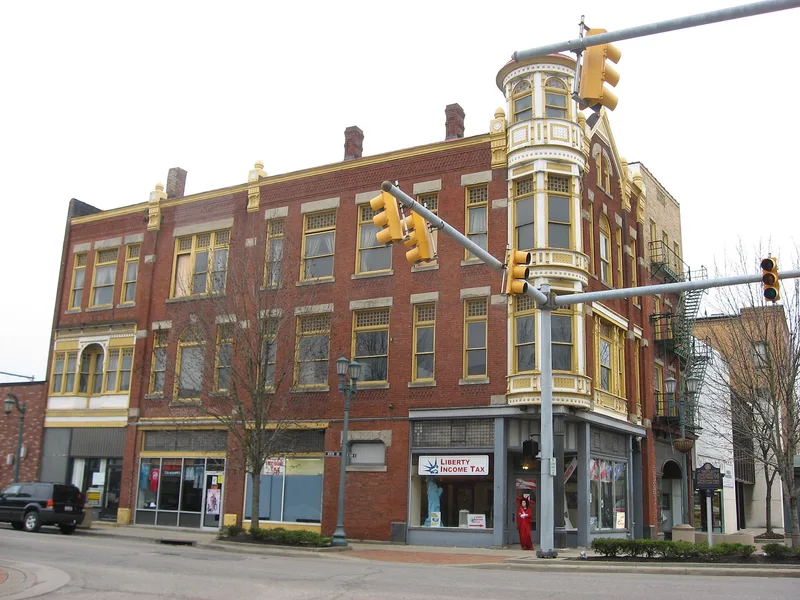
Eight commercial buildings cluster around The Diamond, an open space formed where Market and Sixth Streets meet in downtown East Liverpool, Ohio. Built between about 1880 and 1920, they range from two-story brick Victorian blocks to the five-story Little Building, finished in buff brick and glazed terra cotta. The Thompson Block, with its corner turret, colored glass transoms and central gable, is cited as one of the finest examples of late 19th century eclecticism. The district grew up as the pottery industry drove the city's population from 5,500 in 1880 to over 22,000 in 1905, and commerce moved up from the riverfront to this spot. The Diamond has hosted a monument, parades, public gatherings and War Bond sales, and is now a landscaped park. The buildings share brick and terra cotta materials and a scale of two to five stories, forming a visually cohesive unit that records East Liverpool's most prosperous period.
Machine-generated summary. This summary was generated by a language model from the official nomination document and has not been reviewed line by line by an editor. It may contain errors. Check the source document before relying on any detail. Source: nomination document (PDF) · catalog entry. Generated October 2026 (model claude-sonnet-5-5, prompt v1.0-2026-10-29).
| Period of significance | 1880-1920 |
|---|---|
| Styles | High Victorian Commercial, Queen Anne, Italianate, neo-classical influence and Art Deco storefront, plus restrained early 20th century commercial styles |
| Areas of significance | Commerce, Architecture |
| Acreage | 2 |
| Boundary source | NPS cultural-resource GIS polygon |
| Full listing page | Diamond Historic District (property record) |
What listing means for this property
This is a historic district. Buildings within its boundary are either contributing (they add to the district's significance) or non-contributing. Owners of contributing income-producing buildings can claim the 20% federal rehabilitation tax credit; homeowners should look at state credits. National Register districts impose no design review by themselves; a local historic district ordinance, if one exists, does (the difference explained).
General information, not legal or tax advice. Rules change; confirm with your State Historic Preservation Office or a qualified adviser.