Central Branch, National Home for Disabled Volunteer Soldiers

Why it's listed
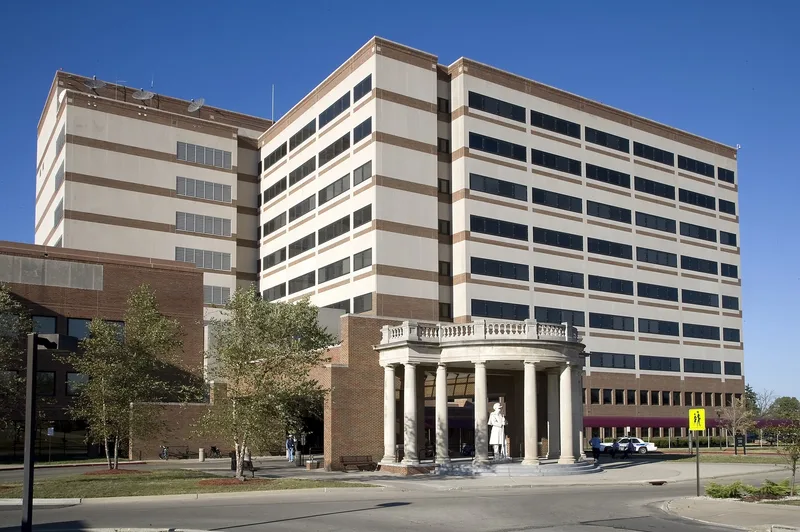
Dayton's veterans' campus began in 1867 as the Central Branch of the National Home for Disabled Volunteer Soldiers. It sits on a ridge overlooking the Miami valley, about three miles west of downtown. The listed district covers 261.2 acres, including the medical center grounds and the 98.2-acre National Cemetery. The original plan centered on a parade ground with a bandstand, ringed by barracks, headquarters, a natural grotto and officers' quarters. That layout survives, along with the 1868 Gothic Revival gate lodge, an ornate eastern entrance and a road system set up in the 1880s to handle heavy visitor traffic. Buildings range from frame staff quarters in Tudor, Queen Anne and Italianate styles to three-story Colonial Revival patient care buildings of the 1930s and 1940s. The cemetery holds roughly 35,700 full-casket burials around a tall Soldiers Monument. The district is recognized for its role in veterans' care, medicine, government policy, landscape design and architecture between 1867 and 1952. It still serves veterans today.
Machine-generated summary. This summary was generated by a language model from the official nomination document and has not been reviewed line by line by an editor. It may contain errors. Check the source document before relying on any detail. Source: nomination document (PDF) · catalog entry. Generated October 2026 (model claude-sonnet-5-5, prompt v1.0-2026-10-29).
| Period of significance | 1867-1952 |
|---|---|
| Styles | Late Victorian (Gothic, Italianate), Second Empire, Colonial Revival, Classical Revival, Queen Anne, California Bungalow, Georgian Revival |
| Areas of significance | Architecture, Health/Medicine, Politics/Government, Social History, Landscape Architecture, Community Planning and Development |
| Acreage | 261.2 |
| Boundary source | NPS cultural-resource GIS polygon |
| Full listing page | Central Branch, National Home for Disabled Volunteer Soldiers (property record) |
What listing means for this property
This is a historic district. Buildings within its boundary are either contributing (they add to the district's significance) or non-contributing. Owners of contributing income-producing buildings can claim the 20% federal rehabilitation tax credit; homeowners should look at state credits. National Register districts impose no design review by themselves; a local historic district ordinance, if one exists, does (the difference explained).
General information, not legal or tax advice. Rules change; confirm with your State Historic Preservation Office or a qualified adviser.