Center Street Historic District

Why it's listed
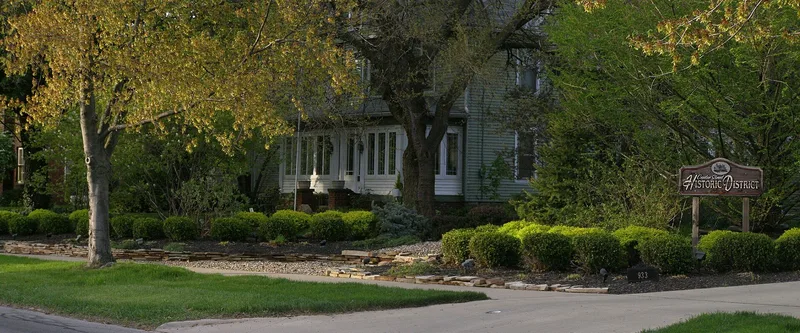
Center Street in Ashland, Ohio, was laid out in 1846 and developed into the town's finest residential neighborhood. The district includes 44 homes, nearly all residential, built from the 1840s to the 1920s in Greek Revival, Queen Anne, Prairie, Spanish, Italian, Tudor and other styles. Its larger houses, built between 1896 and 1918, were commissioned by industrialists and civic leaders, among them members of the Myers family, whose pump and farm equipment company brought commercial prosperity to the town. Earlier homes, such as those of the Freer, Damp and Cowan families, were built by bankers, millers and physicians. The nomination presents the street as significant for the variety of its styles, the quality and individuality of its major houses, and the way mature trees and the buildings blend together. Most buildings remain well kept and the street looks much as it did around 1915, though the large F. E. Myers house was abandoned in 1973 and faced demolition.
Machine-generated summary. This summary was generated by a language model from the official nomination document and has not been reviewed line by line by an editor. It may contain errors. Check the source document before relying on any detail. Source: nomination document (PDF) · catalog entry. Generated October 2026 (model claude-sonnet-5-5, prompt v1.0-2026-10-29).
| Period of significance | 1800-1899, 1900- |
|---|---|
| Styles | Varied styles including Greek Revival, Early Gothic Revival, Queen Anne, Prairie, Spanish, Italian and Tudor |
| Areas of significance | Architecture |
| Acreage | 16 |
| Boundary source | NPS cultural-resource GIS polygon |
| Full listing page | Center Street Historic District (property record) |
What listing means for this property
This is a historic district. Buildings within its boundary are either contributing (they add to the district's significance) or non-contributing. Owners of contributing income-producing buildings can claim the 20% federal rehabilitation tax credit; homeowners should look at state credits. National Register districts impose no design review by themselves; a local historic district ordinance, if one exists, does (the difference explained).
General information, not legal or tax advice. Rules change; confirm with your State Historic Preservation Office or a qualified adviser.