Carroll, John, University North Quad Historic District

Why it's listed
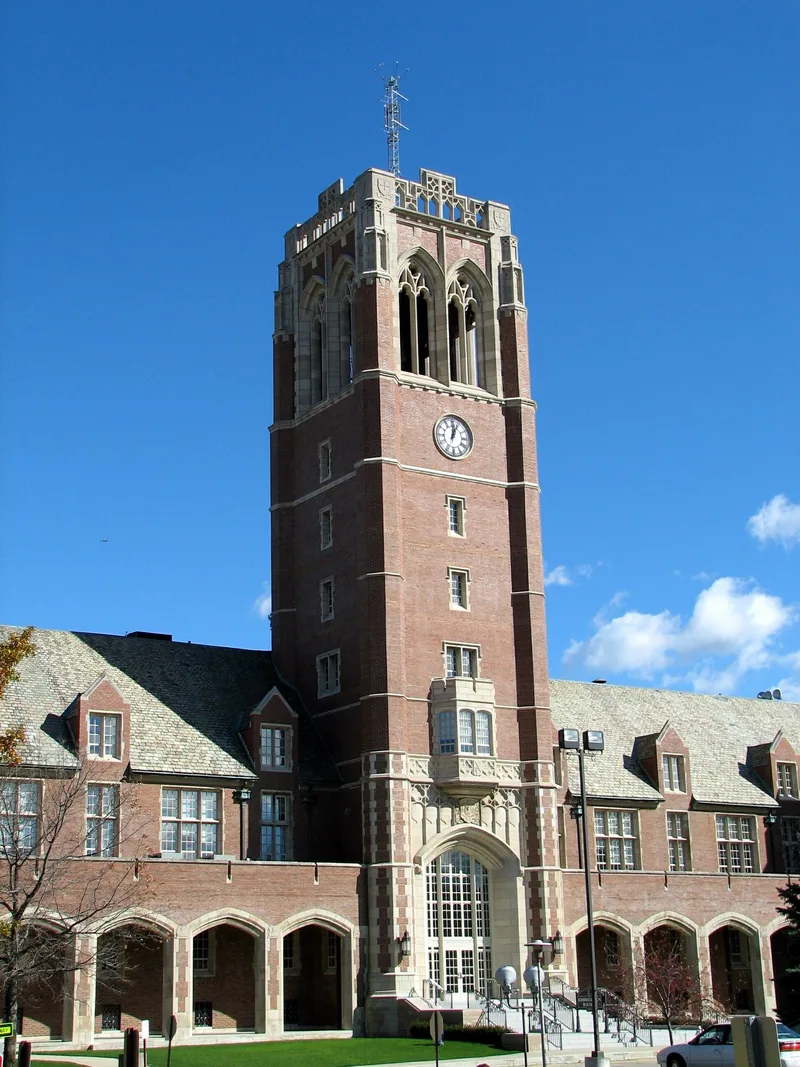
At the center of John Carroll University in University Heights, Ohio, a 19-acre group of brick and stone buildings surrounds a grassy quadrangle. The district holds seven contributing buildings: the Administration Building with its nine-story bell tower, Rodman and Bernet Halls, the Boiler House, and the later Pacelli, Dolan and Murphy residence halls. Philip L. Small prepared the 1931 master plan, scaled down from an earlier, grander vision because of the Depression. Construction of the first four buildings was halted and then resumed in 1935. The buildings use steep slate roofs, patterned brick and stone trim in a Collegiate Gothic manner, with later Art Deco and mid-century influences. Dormitories followed in 1952, 1955 and 1963 as enrollment grew. The campus opened in what had been sparse farmland, and the surrounding village grew so quickly that it took the name University Heights. The district remains in educational use and keeps its original layout and materials.
Machine-generated summary. This summary was generated by a language model from the official nomination document and has not been reviewed line by line by an editor. It may contain errors. Check the source document before relying on any detail. Source: nomination document (PDF) · catalog entry. Generated October 2026 (model claude-sonnet-5-5, prompt v1.0-2026-10-29).
| Period of significance | 1935-1963 |
|---|---|
| Styles | Late Gothic Revival, Collegiate Gothic, Art Deco |
| Areas of significance | Community Planning and Development, Education |
| Acreage | 19 |
| Boundary source | NPS cultural-resource GIS polygon |
| Full listing page | Carroll, John, University North Quad Historic District (property record) |
What listing means for this property
This is a historic district. Buildings within its boundary are either contributing (they add to the district's significance) or non-contributing. Owners of contributing income-producing buildings can claim the 20% federal rehabilitation tax credit; homeowners should look at state credits. National Register districts impose no design review by themselves; a local historic district ordinance, if one exists, does (the difference explained).
General information, not legal or tax advice. Rules change; confirm with your State Historic Preservation Office or a qualified adviser.