Capital University Historic District

Why it's listed
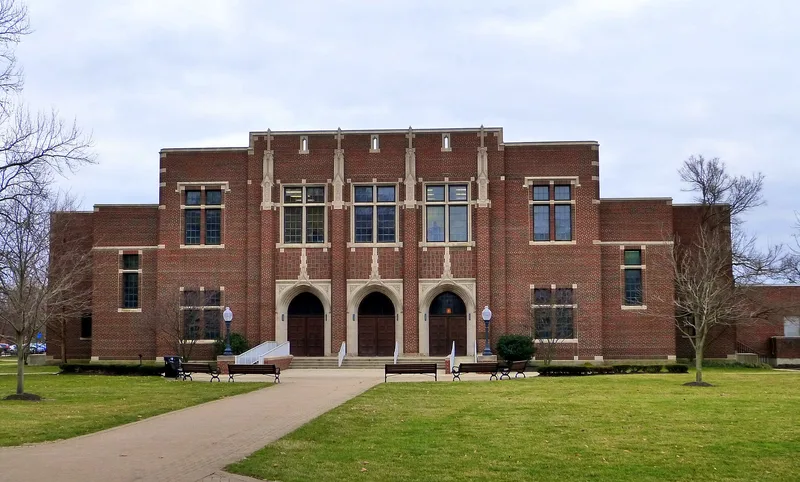
Capital University's central campus in Bexley, on the east side of Columbus, contains a group of buildings erected between 1876 and 1928 around a large green space. Lehmann Hall and Leonard Hall, both finished in 1876, are brick Italianate buildings with slate roofs and arched windows. Lehmann was later covered with a concrete finish imitating stone in 1910. Loy Gymnasium followed in 1905, Rudolph Hall, a Neo-Gothic library, in 1915, and Mees Music Hall, also Neo-Gothic, in 1928. Bexley Hall, a plain postwar brick addition, sits behind Mees. The university, founded by the Evangelical Lutheran Church and chartered in 1850, moved here in 1876, its third site, seeking quiet away from the downtown railroad area. The district was recognized for the way these buildings illustrate shifting architectural tastes and the early growth of an important Columbus educational institution.
Machine-generated summary. This summary was generated by a language model from the official nomination document and has not been reviewed line by line by an editor. It may contain errors. Check the source document before relying on any detail. Source: nomination document (PDF) · catalog entry. Generated October 2026 (model claude-sonnet-5-5, prompt v1.0-2026-10-29).
| Period of significance | 1800-1899, 1900- (specific dates 1876, 1905, 1913, 1928) |
|---|---|
| Styles | Italianate, Neo-Gothic, and functional/unclassified styles |
| Areas of significance | Architecture |
| Acreage | 4 |
| Boundary source | NPS cultural-resource GIS polygon |
| Full listing page | Capital University Historic District (property record) |
What listing means for this property
This is a historic district. Buildings within its boundary are either contributing (they add to the district's significance) or non-contributing. Owners of contributing income-producing buildings can claim the 20% federal rehabilitation tax credit; homeowners should look at state credits. National Register districts impose no design review by themselves; a local historic district ordinance, if one exists, does (the difference explained).
General information, not legal or tax advice. Rules change; confirm with your State Historic Preservation Office or a qualified adviser.