Boneyfiddle Commercial Disrict

Why it's listed
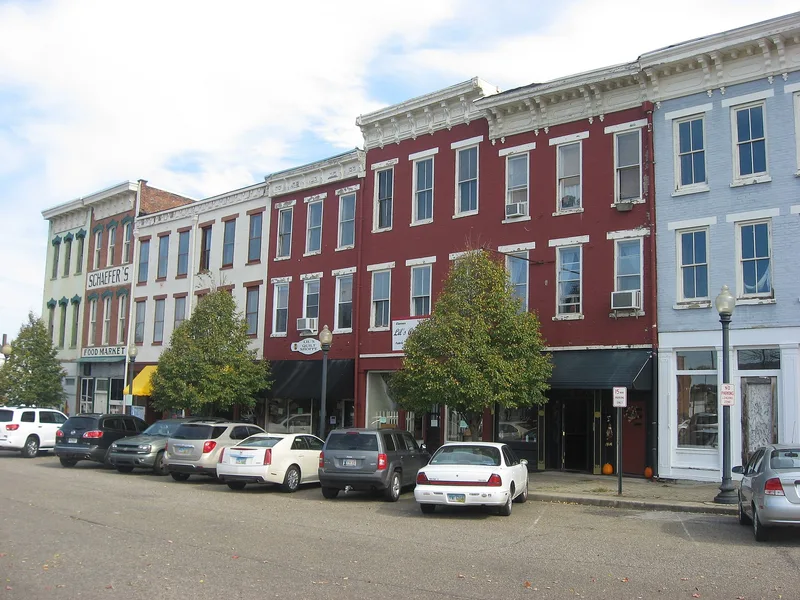
Boneyfiddle is the old commercial heart of Portsmouth, Ohio, covering about 35 acres and nearly all of the town Henry Massie platted in 1803. Its blocks hold Italianate storefronts with cast-iron detail, large hotels such as the 1871-72 Biggs House and the 1899-1900 Portsmouth Hotel, and a scattering of Greek Revival and Federal houses, mostly along Front Street. The First Presbyterian Church of 1849-50 is a visual anchor. The district is tied to the city's rise after 1832, when Portsmouth became the southern end of the Ohio and Erie Canal, and to river trade and the nearby iron-producing region. Business activity shifted northeast after a new post office was built in 1892, so the older streetscape changed little afterward. Surviving buildings recall shoe factories, a brewery, hotels, Ohio's first department store of its kind in Portsmouth, and the homes of bankers, builders and industrialists who shaped the town's economy.
Machine-generated summary. This summary was generated by a language model from the official nomination document and has not been reviewed line by line by an editor. It may contain errors. Check the source document before relying on any detail. Source: nomination document (PDF) · catalog entry. Generated October 2026 (model claude-sonnet-5-5, prompt v1.0-2026-10-29).
| Period of significance | 1803-1900 |
|---|---|
| Styles | Italianate commercial buildings with Greek Revival and Federal houses; also Second Renaissance Revival and Romanesque Revival |
| Areas of significance | Industry, Commerce, Architecture |
| Acreage | 35 |
| Boundary source | NPS cultural-resource GIS polygon |
| Full listing page | Boneyfiddle Commercial Disrict (property record) |
What listing means for this property
This is a historic district. Buildings within its boundary are either contributing (they add to the district's significance) or non-contributing. Owners of contributing income-producing buildings can claim the 20% federal rehabilitation tax credit; homeowners should look at state credits. National Register districts impose no design review by themselves; a local historic district ordinance, if one exists, does (the difference explained).
General information, not legal or tax advice. Rules change; confirm with your State Historic Preservation Office or a qualified adviser.