Belmont Historic District

Why it's listed
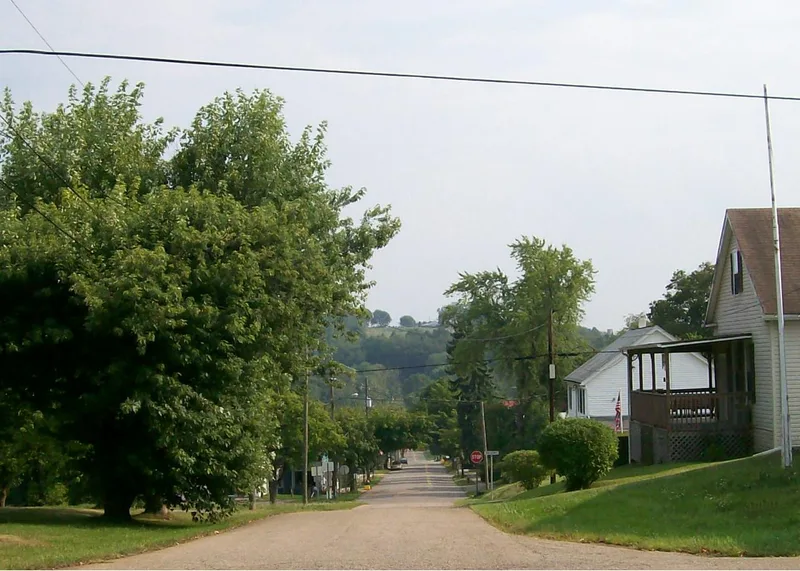
Belmont is a small railroad village in Belmont County, Ohio, and its historic district takes in the original plat plus a stretch of Jefferson Street to the south. Joseph Wright laid out the unusual elongated, "coffin"-shaped plat, with corner streets running at 45-degree angles. The district holds 139 buildings dating from about 1810 to the 1920s, mostly modest wood-frame houses with Gothic and Greek Revival detailing, along with log houses later sided over. Jefferson Street forms the commercial core, with brick and wood stores, a Richardsonian bank built in 1895 and altered in 1900, and Queen Anne houses such as the Dr. Lindley Schooley House. The village's economy rested on the railroad. Seven cigar factories operated here, and Cooper Acton's factory produced 4.2 million cigars in 1910. Belmont also became eastern Ohio's largest horse market and a major livestock shipping point. Early garages, a telephone company and a movie theatre reflect its growth into the twentieth century.
Machine-generated summary. This summary was generated by a language model from the official nomination document and has not been reviewed line by line by an editor. It may contain errors. Check the source document before relying on any detail. Source: nomination document (PDF) · catalog entry. Generated October 2026 (model claude-sonnet-5-5, prompt v1.0-2026-10-29).
| Styles | Vernacular with Greek Revival, Gothic, Queen Anne, Richardsonian and Italianate elements |
|---|---|
| Areas of significance | Industry, Community Planning and Development, Architecture |
| Acreage | 75 |
| Boundary source | NPS cultural-resource GIS polygon |
| Full listing page | Belmont Historic District (property record) |
What listing means for this property
This is a historic district. Buildings within its boundary are either contributing (they add to the district's significance) or non-contributing. Owners of contributing income-producing buildings can claim the 20% federal rehabilitation tax credit; homeowners should look at state credits. National Register districts impose no design review by themselves; a local historic district ordinance, if one exists, does (the difference explained).
General information, not legal or tax advice. Rules change; confirm with your State Historic Preservation Office or a qualified adviser.