Austin-Magie Farm and Mill District

Why it's listed
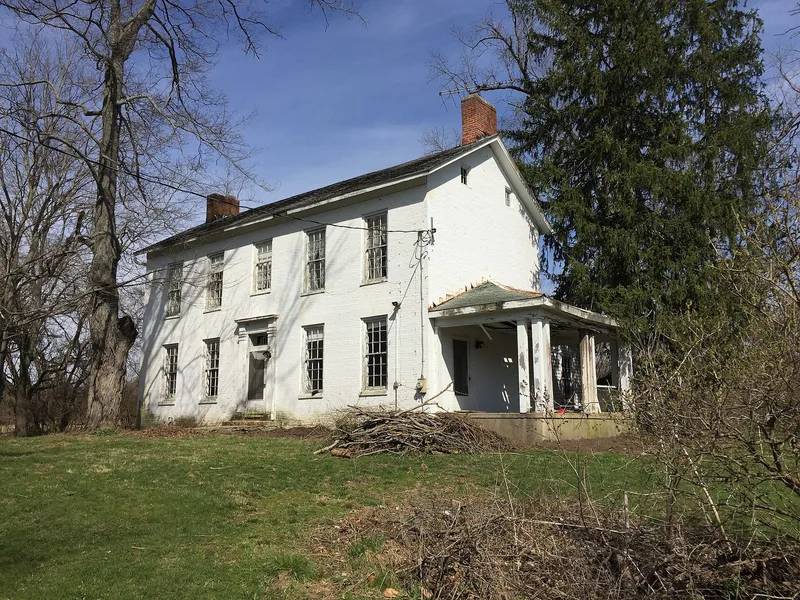
Along Four Mile Creek, a mile north of Oxford, Ohio, this 34-acre district preserves a working farm landscape and the remains of a large water-powered mill. The centerpiece is a two-and-one-half story brick farmhouse built in 1841, with a symmetrical five-bay front, Flemish bond brickwork and nine-over-nine windows. Nearby are a gambrel-roofed dairy barn, other barns and a corn crib from the 1920s and 1930s, plus a dilapidated early nineteenth-century braced frame house. Aaron Austin, who owned the land from 1815 to 1863, built the house, the frame building and the mill. Only the limestone foundation of the overshot mill survives, along with a millrace about one mile long, the largest earthen structure of its kind in Oxford Township. The mills operated from 1815 to 1916. Later owner David M. Magie became known for the large hogs called the Magie Breed, forerunners of the Poland China. The district was listed for its agricultural, industrial and architectural associations.
Machine-generated summary. This summary was generated by a language model from the official nomination document and has not been reviewed line by line by an editor. It may contain errors. Check the source document before relying on any detail. Source: nomination document (PDF) · catalog entry. Generated October 2026 (model claude-sonnet-5-5, prompt v1.0-2026-10-29).
| Period of significance | circa 1815-1940 |
|---|---|
| Styles | Vernacular "I" house |
| Areas of significance | Industry, Commerce, Agriculture, Architecture |
| Acreage | 34 |
| Boundary source | NPS cultural-resource GIS polygon |
| Full listing page | Austin-Magie Farm and Mill District (property record) |
What listing means for this property
This is a historic district. Buildings within its boundary are either contributing (they add to the district's significance) or non-contributing. Owners of contributing income-producing buildings can claim the 20% federal rehabilitation tax credit; homeowners should look at state credits. National Register districts impose no design review by themselves; a local historic district ordinance, if one exists, does (the difference explained).
General information, not legal or tax advice. Rules change; confirm with your State Historic Preservation Office or a qualified adviser.