Archwood Avenue Historic District

Why it's listed
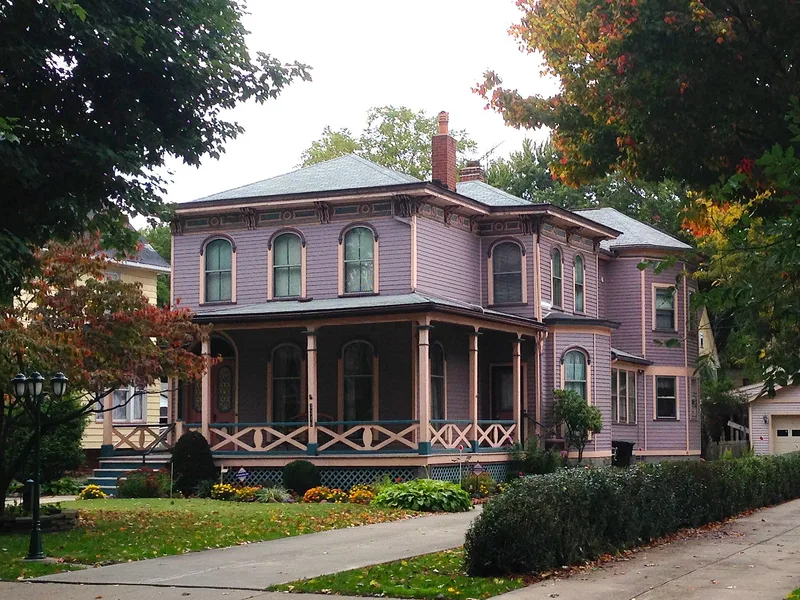
Archwood Avenue is a broad, tree-lined residential street in Cleveland's Brooklyn Centre neighborhood, and the historic district along it holds 57 contributing buildings on about 13 acres. The earliest buildings, including the circa 1870 Italianate Adam Poe House, are at the eastern end, and the houses grow newer toward the west. Queen Anne houses with corner towers, Neocolonial homes with unusual third-floor gables, and large Neoclassical apartment buildings at West 33rd Street give the street variety. The William R. Coates House is perhaps the largest house in the area. The street was first laid out as Greenwood and was renamed Archwood in 1894, the year Brooklyn Village was annexed to Cleveland. Its width and generous lots made it the site of the neighborhood's finest homes, and it stayed residential while nearby streets lost landmarks to commercial use. The district was recognized for its architecture and for its role in the area's development.
Machine-generated summary. This summary was generated by a language model from the official nomination document and has not been reviewed line by line by an editor. It may contain errors. Check the source document before relying on any detail. Source: nomination document (PDF) · catalog entry. Generated October 2026 (model claude-sonnet-5-5, prompt v1.0-2026-10-29).
| Styles | Italianate, Queen Anne, Neocolonial/Colonial Revival and Neoclassical |
|---|---|
| Areas of significance | Architecture |
| Acreage | 13 |
| Boundary source | NPS cultural-resource GIS polygon |
| Full listing page | Archwood Avenue Historic District (property record) |
What listing means for this property
This is a historic district. Buildings within its boundary are either contributing (they add to the district's significance) or non-contributing. Owners of contributing income-producing buildings can claim the 20% federal rehabilitation tax credit; homeowners should look at state credits. National Register districts impose no design review by themselves; a local historic district ordinance, if one exists, does (the difference explained).
General information, not legal or tax advice. Rules change; confirm with your State Historic Preservation Office or a qualified adviser.