West Side Historic District

Why it's listed
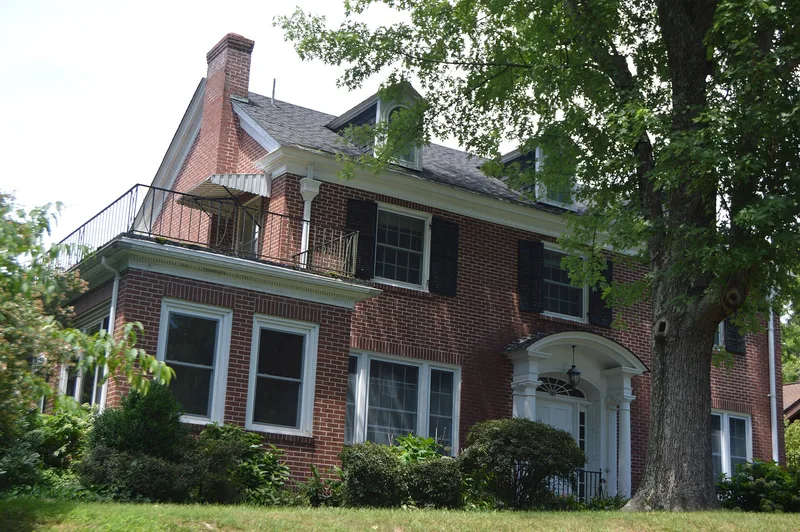
West Side Historic District is a residential neighborhood of roughly 111 acres just west of downtown Hendersonville, North Carolina. It grew from a series of grid-plan subdivisions laid out between 1917 and 1951, many carved from earlier large landholdings. Gently rolling hills and granite retaining walls give the streets a distinctive character. The district holds 245 contributing buildings, mainly houses with their garages and outbuildings, plus one school. Bungalows are by far the most common type, with 102 counted, alongside Colonial Revival, Tudor Revival, Queen Anne, Minimal Traditional and Ranch houses. The oldest is the Columbus Mills Pace House, dating from the 1860s. Much of the main building period ran from the 1910s to the late 1920s, and many houses are attributed to Hendersonville architect Erle Stillwell, who often blended Classical and Tudor Revival details into bungalow forms. Two Neoclassical Revival apartment buildings, the Maxwell and the Ambassador, and Rosa Edwards Elementary School add variety to a well-preserved neighborhood.
Machine-generated summary. This summary was generated by a language model from the official nomination document and has not been reviewed line by line by an editor. It may contain errors. Check the source document before relying on any detail. Source: nomination document (PDF) · catalog entry. Generated October 2026 (model claude-sonnet-5-5, prompt v1.0-2026-10-29).
| Styles | Bungalow/Craftsman, Colonial Revival, Modern Movement, Minimal Traditional |
|---|---|
| Areas of significance | Architecture, Community Planning and Development |
| Acreage | 111 |
| Boundary source | NPS cultural-resource GIS polygon |
| Full listing page | West Side Historic District (property record) |
What listing means for this property
This is a historic district. Buildings within its boundary are either contributing (they add to the district's significance) or non-contributing. Owners of contributing income-producing buildings can claim the 20% federal rehabilitation tax credit; homeowners should look at state credits. National Register districts impose no design review by themselves; a local historic district ordinance, if one exists, does (the difference explained).
General information, not legal or tax advice. Rules change; confirm with your State Historic Preservation Office or a qualified adviser.