West Point on the Eno

Why it's listed
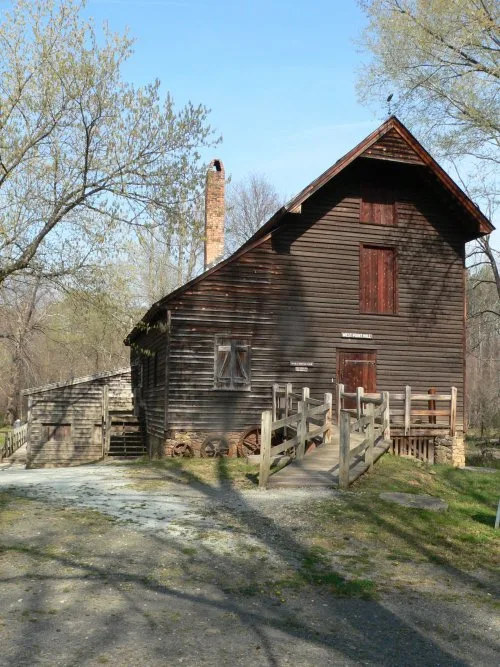
West Point on the Eno is a city park of roughly 26 acres of meadow along the Eno River at Roxboro Road in Durham. It occupies the site of West Point, a mill community of about 300 families that grew around a gristmill established in 1778 at Shoemaker's Ford. Surviving elements include the c. 1843 McCown-Mangum House, a vernacular Greek Revival farmhouse with its kitchen in the basement; a c. 1880 board-and-batten pack house where photographer Hugh Mangum had a darkroom; a log tobacco barn; and the ruins of a late eighteenth-century house site with its chimney. The West Point Mill, rebuilt from early twentieth-century photographs, stands on the original mill foundation with its head and tail races. The mill ran from 1778 to 1942, longer than any of the 24 mills known on the river, and the property passed through owners who included legislators, justices of the peace and three Durham mayors. It is valued as a reminder of Durham's rural past.
Machine-generated summary. This summary was generated by a language model from the official nomination document and has not been reviewed line by line by an editor. It may contain errors. Check the source document before relying on any detail. Source: nomination document (PDF) · catalog entry. Generated October 2026 (model claude-sonnet-5-5, prompt v1.0-2026-10-29).
| Styles | Vernacular Greek Revival (McCown-Mangum House) |
|---|---|
| Areas of significance | Industry, Commerce, Historic - Non-Aboriginal, Military, Exploration/Settlement, Architecture |
| Acreage | 25.8 |
| Boundary source | NPS cultural-resource GIS polygon |
| Full listing page | West Point on the Eno (property record) |
What listing means for this property
This is a historic district. Buildings within its boundary are either contributing (they add to the district's significance) or non-contributing. Owners of contributing income-producing buildings can claim the 20% federal rehabilitation tax credit; homeowners should look at state credits. National Register districts impose no design review by themselves; a local historic district ordinance, if one exists, does (the difference explained).
General information, not legal or tax advice. Rules change; confirm with your State Historic Preservation Office or a qualified adviser.