West End Historic District

Why it's listed
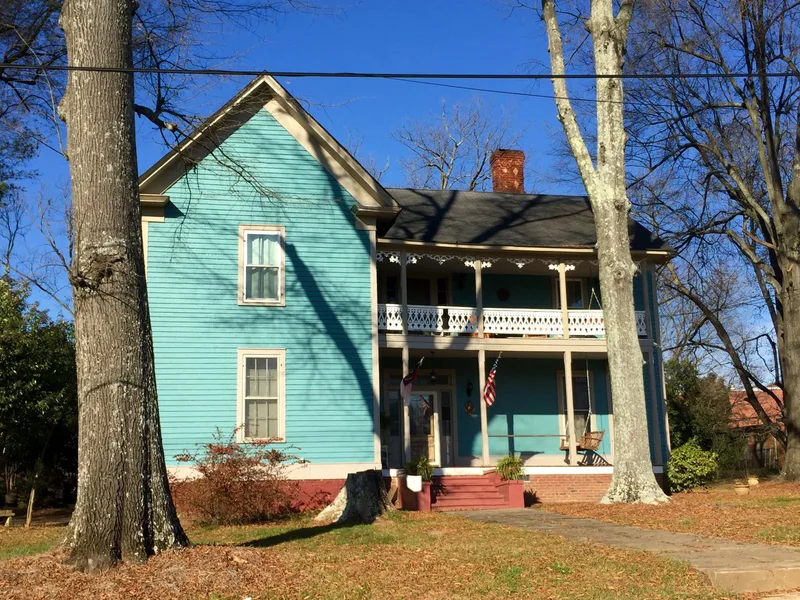
West End is a linear neighborhood of houses on West Mountain and West Gold streets in Kings Mountain, North Carolina, joined by Cansler, Tracy, Watterson and Goforth streets. Its buildings date mostly from about 1900 to 1939, with the oldest, the Ware Family House, built around 1882. Four groups define its character: Queen Anne cottages and larger early twentieth-century houses mixing Queen Anne and Colonial Revival elements; remodeled turn-of-the-century cottages and bungalows; brick veneer period cottages of the 1930s; and two fully realized Colonial Revival houses, one probably designed by Louis Humbert Asbury and one designed in 1940 by Shelby architect Victor Winfred Breeze. Lots reflect the 1899 Tracy-Dixon plat, and mature trees, pecan plantings, barns, poultry houses and garages recall the semi-rural early decades. The district was listed because it preserves a cohesive residential streetscape and architectural record from about 1882 to about 1955. Of 150 resources, 101 contribute to its character, and modern alterations have been modest.
Machine-generated summary. This summary was generated by a language model from the official nomination document and has not been reviewed line by line by an editor. It may contain errors. Check the source document before relying on any detail. Source: nomination document (PDF) · catalog entry. Generated October 2026 (model claude-sonnet-5-5, prompt v1.0-2026-10-29).
| Period of significance | ca. 1882 to ca. 1955 |
|---|---|
| Styles | Queen Anne, Bungalow/Craftsman, Colonial Revival, Period Cottage, Minimal Traditional, Tudor Revival |
| Areas of significance | Architecture, Community Planning and Development |
| Acreage | 39 |
| Boundary source | NPS cultural-resource GIS polygon |
| Full listing page | West End Historic District (property record) |
What listing means for this property
This is a historic district. Buildings within its boundary are either contributing (they add to the district's significance) or non-contributing. Owners of contributing income-producing buildings can claim the 20% federal rehabilitation tax credit; homeowners should look at state credits. National Register districts impose no design review by themselves; a local historic district ordinance, if one exists, does (the difference explained).
General information, not legal or tax advice. Rules change; confirm with your State Historic Preservation Office or a qualified adviser.