West Durham Historic District

Why it's listed
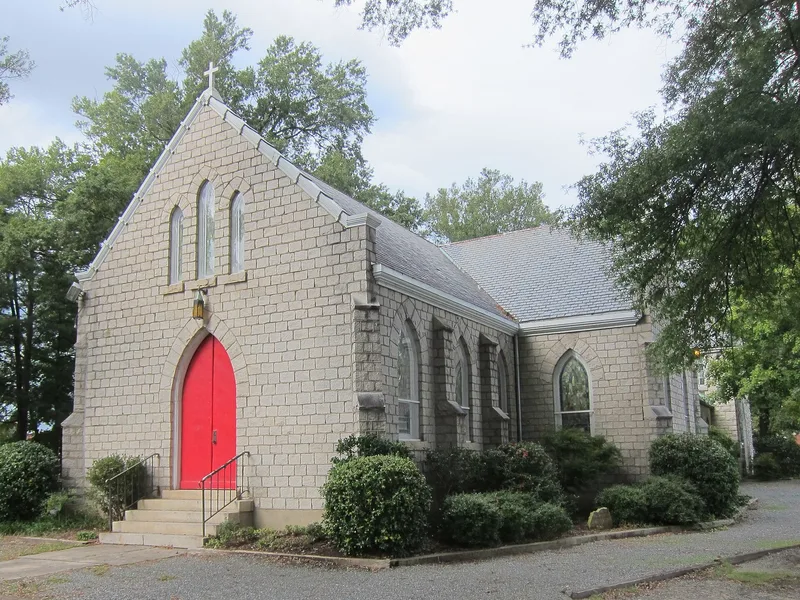
West Durham is a mill village of about ninety acres, divided by Hillsborough Road. Its core is the Erwin Cotton Mills complex on West Main Street, where Mill No. 1 opened in 1892 and was lengthened in 1896, and Mill No. 4 followed in 1909-10. Of the eighty-four houses, seventy-seven were built by the company for its workers in three one-story types: small gabled houses, T-shaped houses and pyramidal-roofed houses. Beside the mills, a commercial strip along Ninth Street includes the former Fidelity Bank, a Neoclassical Revival building designed by Rose and Rose. Institutional buildings include the 1928 E. K. Powe School and two churches. Many houses received replacement siding and porch parts over the years, but most changes are reversible and the streetscapes remain intact. The district was listed because it shows how a company-built textile community was laid out and lived in, with its social history outweighing the architectural detail of individual buildings.
Machine-generated summary. This summary was generated by a language model from the official nomination document and has not been reviewed line by line by an editor. It may contain errors. Check the source document before relying on any detail. Source: nomination document (PDF) · catalog entry. Generated October 2026 (model claude-sonnet-5-5, prompt v1.0-2026-10-29).
| Styles | Vernacular Italianate and Queen Anne (Headquarters Building); Neoclassical Revival; Gothic Revival; mill-village housing types |
|---|---|
| Areas of significance | Commerce, Architecture |
| Acreage | 89.4 |
| Boundary source | NPS cultural-resource GIS polygon |
| Full listing page | West Durham Historic District (property record) |
What listing means for this property
This is a historic district. Buildings within its boundary are either contributing (they add to the district's significance) or non-contributing. Owners of contributing income-producing buildings can claim the 20% federal rehabilitation tax credit; homeowners should look at state credits. National Register districts impose no design review by themselves; a local historic district ordinance, if one exists, does (the difference explained).
General information, not legal or tax advice. Rules change; confirm with your State Historic Preservation Office or a qualified adviser.