Wendell Boulevard Historic District

Why it's listed
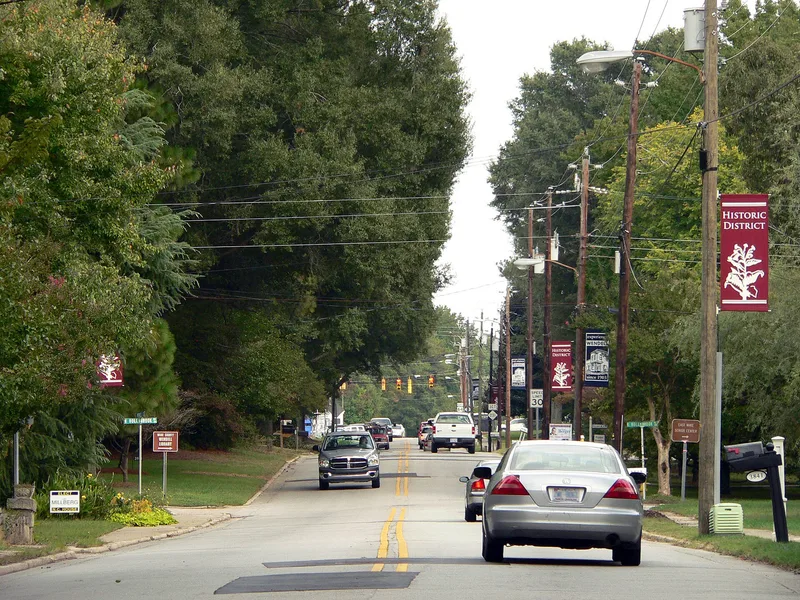
Along Wendell Boulevard and the streets that meet it in the small tobacco town of Wendell, a cluster of fifty-nine primary resources built between about 1890 and 1958 forms a residential district of uniform setbacks, generous front yards and mature oaks. The houses reflect the prosperity of Wendell's tobacco economy, which grew after the Granville Wilt drove farm families into eastern Wake County around 1900 and after the town's incorporation in 1903. Residents included warehouse owners, brokers, bankers and others whose livelihoods depended on the crop, and the district was their preferred neighborhood. Its houses range from modest one-story cottages to large dwellings, including the Mallie Asa Griffin House, a Queen Anne residence with a double-height wraparound porch, and the Mallie Curtis Todd House, described as the county's only example of the aeroplane bungalow. The district is regarded as locally significant for its collection of Wake County house types and styles.
Machine-generated summary. This summary was generated by a language model from the official nomination document and has not been reviewed line by line by an editor. It may contain errors. Check the source document before relying on any detail. Source: nomination document (PDF) · catalog entry. Generated October 2026 (model claude-haiku-5-5, prompt v1.1-2026-10-29).
| Period of significance | ca. 1890 - 1958 |
|---|---|
| Styles | Queen Anne, Craftsman, Colonial Revival, Period Cottage, Minimal Traditional, Ranch |
| Areas of significance | Architecture |
| Acreage | 43 |
| Boundary source | NPS cultural-resource GIS polygon |
| Full listing page | Wendell Boulevard Historic District (property record) |
What listing means for this property
This is a historic district. Buildings within its boundary are either contributing (they add to the district's significance) or non-contributing. Owners of contributing income-producing buildings can claim the 20% federal rehabilitation tax credit; homeowners should look at state credits. National Register districts impose no design review by themselves; a local historic district ordinance, if one exists, does (the difference explained).
General information, not legal or tax advice. Rules change; confirm with your State Historic Preservation Office or a qualified adviser.