Valle Crucis Episcopal Mission

Why it's listed
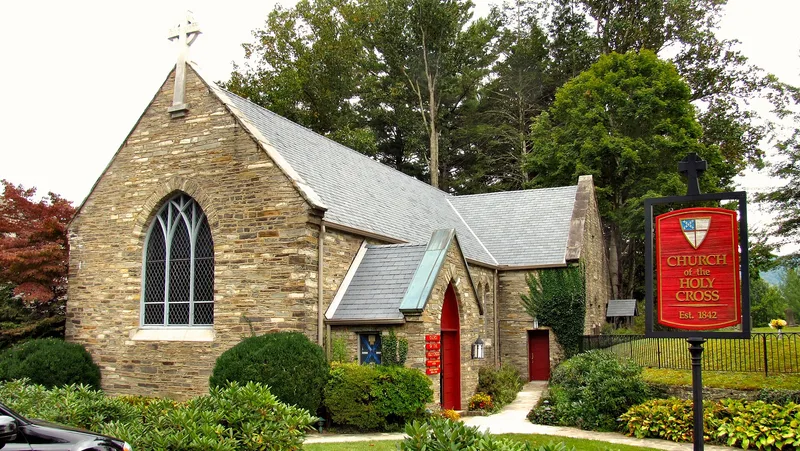
Valle Crucis Episcopal Mission lies in a mountain valley in Watauga County, North Carolina, where the Episcopal Church founded a mission in 1844 under Bishop Levi Silliman Ives. The mission included a school, at one time a seminary, and later an agricultural and industrial school with a model farm. Its buildings date mainly from the 1890s through about 1920, and the district includes the Church of the Holy Cross, a stone Gothic Revival church built around 1924, along with two dormitories, a cemetery with graves from 1808 onward, a bungalow, barns, a concrete power dam and a historic landscape. The district is listed for its association with religious and educational history, and with the agricultural training the mission gave to surrounding families. The school closed in 1943, but the church continued as an organized congregation.
Machine-generated summary. This summary was generated by a language model from the official nomination document and has not been reviewed line by line by an editor. It may contain errors. Check the source document before relying on any detail. Source: nomination document (PDF) · catalog entry. Generated October 2026 (model claude-haiku-5-5, prompt v1.1-2026-10-29).
| Period of significance | 1896-1942 |
|---|---|
| Styles | Gothic Revival (Church of the Holy Cross); Bungalow/Craftsman |
| Areas of significance | Agriculture, Education, Religion |
| Acreage | 426 |
| Boundary source | NPS cultural-resource GIS polygon |
| Full listing page | Valle Crucis Episcopal Mission (property record) |
What listing means for this property
This is a historic district. Buildings within its boundary are either contributing (they add to the district's significance) or non-contributing. Owners of contributing income-producing buildings can claim the 20% federal rehabilitation tax credit; homeowners should look at state credits. National Register districts impose no design review by themselves; a local historic district ordinance, if one exists, does (the difference explained).
General information, not legal or tax advice. Rules change; confirm with your State Historic Preservation Office or a qualified adviser.