Tryon Country Club

Why it's listed
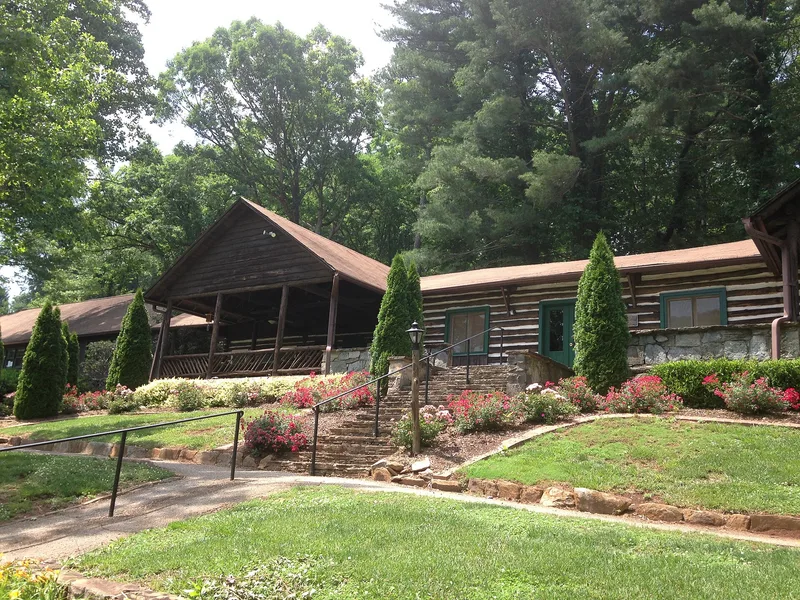
Set in a valley northwest of Tryon, North Carolina, the Tryon Country Club is a members-only nine-hole golf course on about ninety acres, with a swimming pool, tennis court and clubhouse. The course opened in 1917 after Emma Payne Erskine proposed the club, and Scottish-born golf professional Robert A. Leonard built it. Its layout lets golfers play the same fairways and greens twice, giving an eighteen-hole round in half the land. The 1922 clubhouse is a one-story log building in the Rustic Revival style, using natural materials suited to its mountain setting. The club became a social and recreational centre for full-time and part-time residents and hotel guests during the period from 1917 to 1962. Its significance is regarded as local, resting on its role in leisure life and on the clubhouse's architecture.
Machine-generated summary. This summary was generated by a language model from the official nomination document and has not been reviewed line by line by an editor. It may contain errors. Check the source document before relying on any detail. Source: nomination document (PDF) · catalog entry. Generated October 2026 (model claude-haiku-5-5, prompt v1.1-2026-10-29).
| Period of significance | 1917-1962 |
|---|---|
| Styles | Rustic Revival |
| Areas of significance | Architecture, Entertainment/Recreation |
| Acreage | 90 |
| Boundary source | NPS cultural-resource GIS polygon |
| Full listing page | Tryon Country Club (property record) |
What listing means for this property
This is a historic district. Buildings within its boundary are either contributing (they add to the district's significance) or non-contributing. Owners of contributing income-producing buildings can claim the 20% federal rehabilitation tax credit; homeowners should look at state credits. National Register districts impose no design review by themselves; a local historic district ordinance, if one exists, does (the difference explained).
General information, not legal or tax advice. Rules change; confirm with your State Historic Preservation Office or a qualified adviser.