Trinity Methodist Church

The National Park Service has not published a boundary polygon for this district; the map shows the listed properties inside it and the district's reference point.
Why it's listed
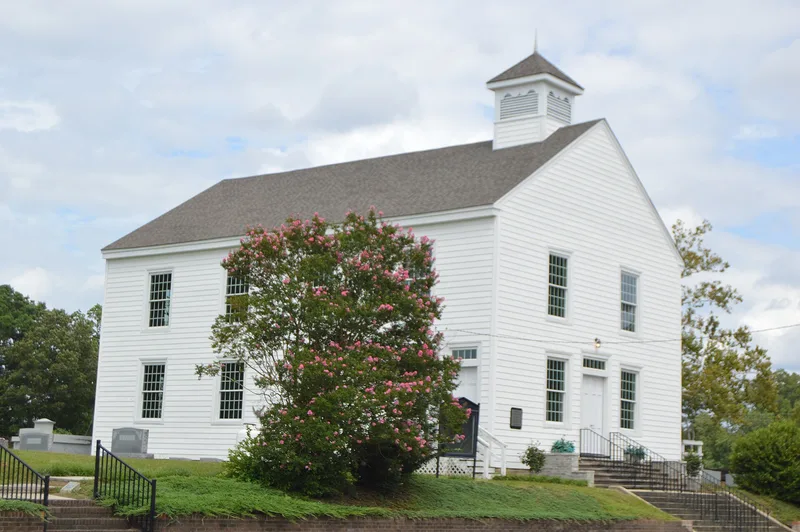
Built around 1848 on the high west bank of the Cape Fear River in Elizabethtown, this simple frame church has a two-story, center-aisle plan under a gable roof, with a small belfry and pointed wood spire rising behind the main facade. Its original double front door, six-pane transom and fifteen-over-fifteen sash windows remain, and the second-floor gallery on three sides is intact, reached by an enclosed stair against the west wall. The Trinity congregation was founded in 1834 and purchased its town lot in 1836, and the church was dedicated in 1849. The building is regarded as the oldest surviving meeting house in Elizabethtown and one of the few antebellum buildings remaining in the town. It recalls the 1840s growth of the county seat, which was fueled by the naval stores trade in turpentine from longleaf pine forests. Its cemetery holds roughly two hundred stones, including Confederate casualties and well-preserved late nineteenth-century wooden markers.
Machine-generated summary. This summary was generated by a language model from the official nomination document and has not been reviewed line by line by an editor. It may contain errors. Check the source document before relying on any detail. Source: nomination document (PDF) · catalog entry. Generated October 2026 (model claude-haiku-5-5, prompt v1.1-2026-10-29).
| Period of significance | ca. 1848 |
|---|---|
| Styles | Federal |
| Areas of significance | Community Planning and Development, Architecture |
| Acreage | 1 |
| Boundary source | not published |
| Full listing page | Trinity Methodist Church (property record) |
What listing means for this property
This is a historic district. Buildings within its boundary are either contributing (they add to the district's significance) or non-contributing. Owners of contributing income-producing buildings can claim the 20% federal rehabilitation tax credit; homeowners should look at state credits. National Register districts impose no design review by themselves; a local historic district ordinance, if one exists, does (the difference explained).
General information, not legal or tax advice. Rules change; confirm with your State Historic Preservation Office or a qualified adviser.