Tapoco Lodge Historic District

Why it's listed
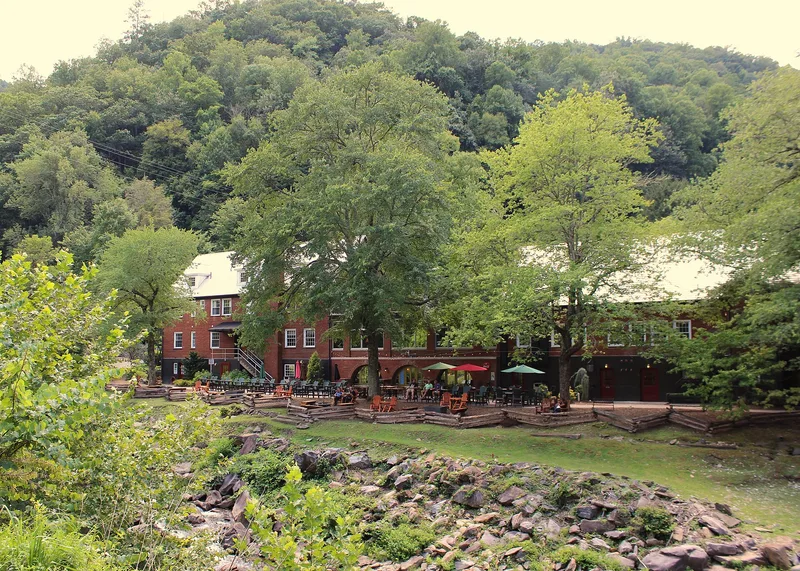
Tapoco Lodge is a small resort complex in a valley formed by the Yellowhammer Branch of the Cheoah River in Graham County, North Carolina. Alcoa built the two-and-one-half-story brick Colonial Revival lodge in 1930 to house employees and guests visiting the nearby Tapoco hydroelectric project. A former store and post office, now the dining hall, was joined to the lodge by the late 1930s. Seven frame guest cottages followed around 1935, and a guard house, storage buildings, a chlorinator house and a quonset-style theater with Art Moderne influence were added around 1950 to 1952. Three gazebos and two tennis courts from 1999 are counted as non-contributing. The district was listed for its part in early automobile tourism in western North Carolina, which grew as US 129 was built, and for its architecture as a representative early 20th century hotel complex. Its period of significance runs from 1930 to 1953, and the lodge has operated continuously for guests.
Machine-generated summary. This summary was generated by a language model from the official nomination document and has not been reviewed line by line by an editor. It may contain errors. Check the source document before relying on any detail. Source: nomination document (PDF) · catalog entry. Generated October 2026 (model claude-sonnet-5-5, prompt v1.0-2026-10-29).
| Period of significance | 1930-1953 |
|---|---|
| Styles | Late 19th & Early 20th Century Revivals/Colonial Revival |
| Areas of significance | Architecture, Entertainment/Recreation |
| Acreage | 122 |
| Boundary source | NPS cultural-resource GIS polygon |
| Full listing page | Tapoco Lodge Historic District (property record) |
What listing means for this property
This is a historic district. Buildings within its boundary are either contributing (they add to the district's significance) or non-contributing. Owners of contributing income-producing buildings can claim the 20% federal rehabilitation tax credit; homeowners should look at state credits. National Register districts impose no design review by themselves; a local historic district ordinance, if one exists, does (the difference explained).
General information, not legal or tax advice. Rules change; confirm with your State Historic Preservation Office or a qualified adviser.